
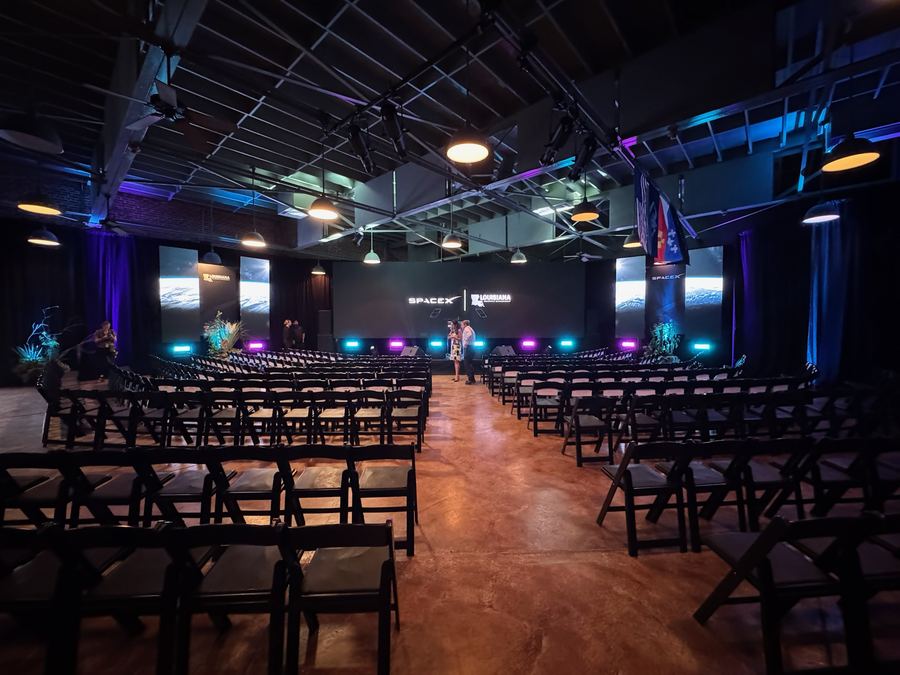
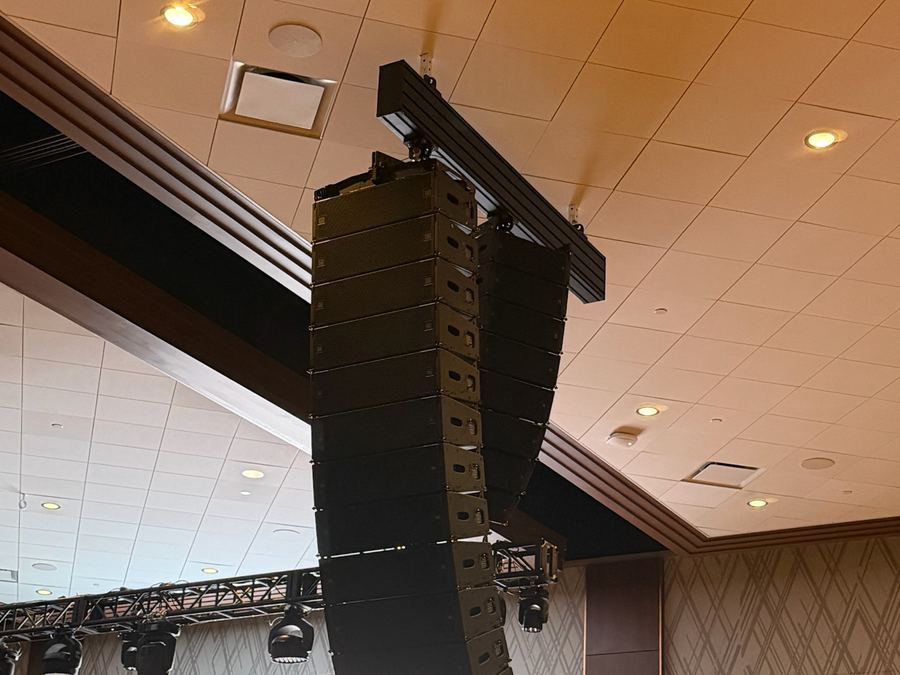
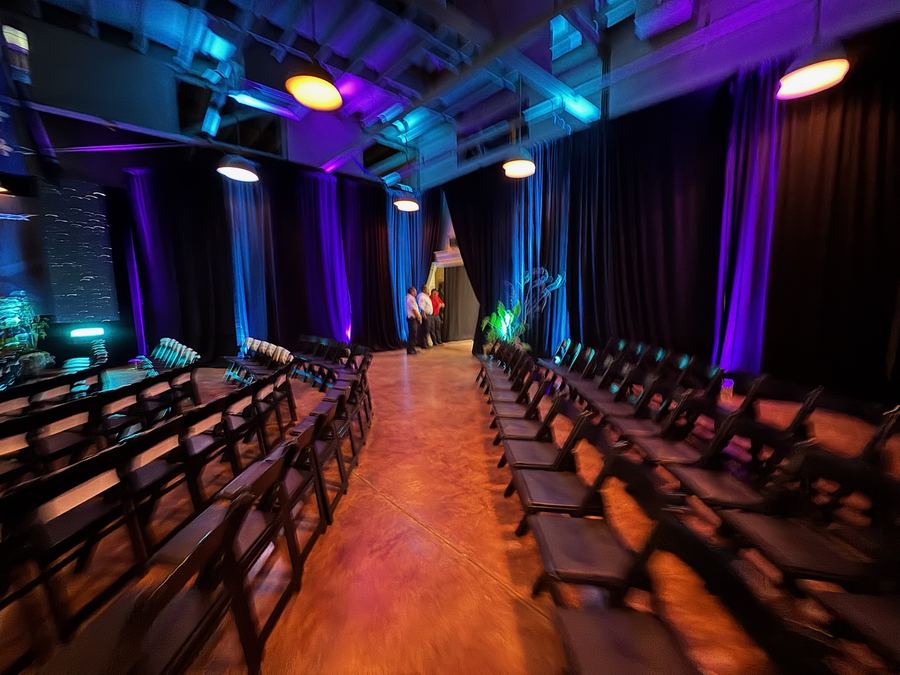
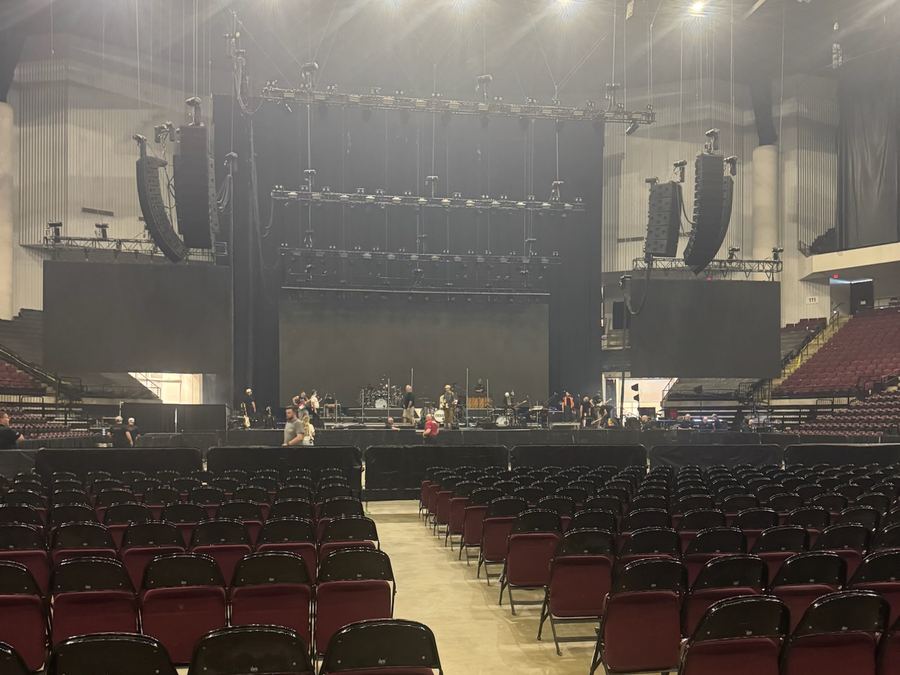
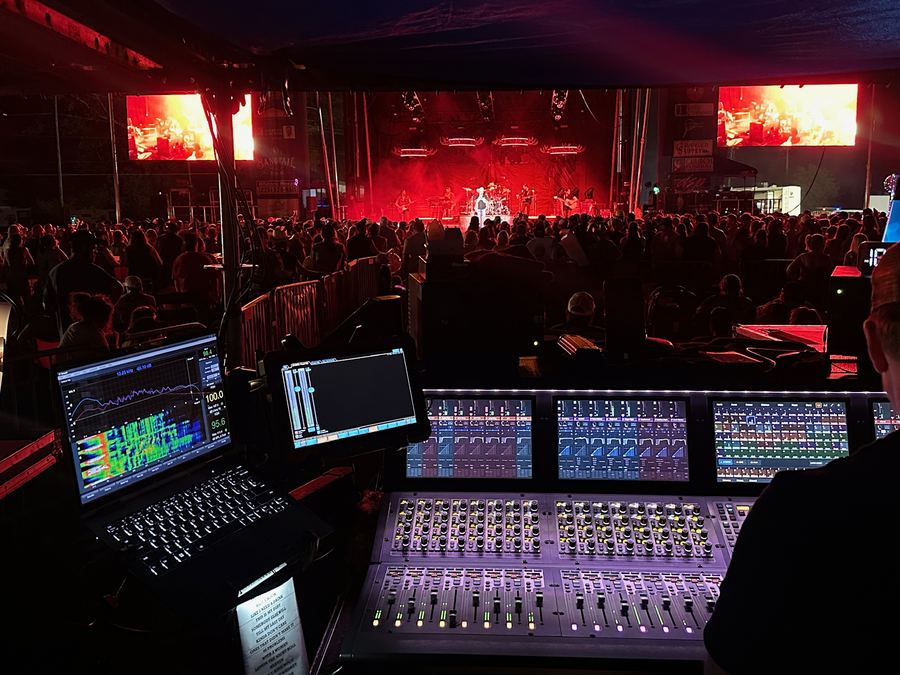
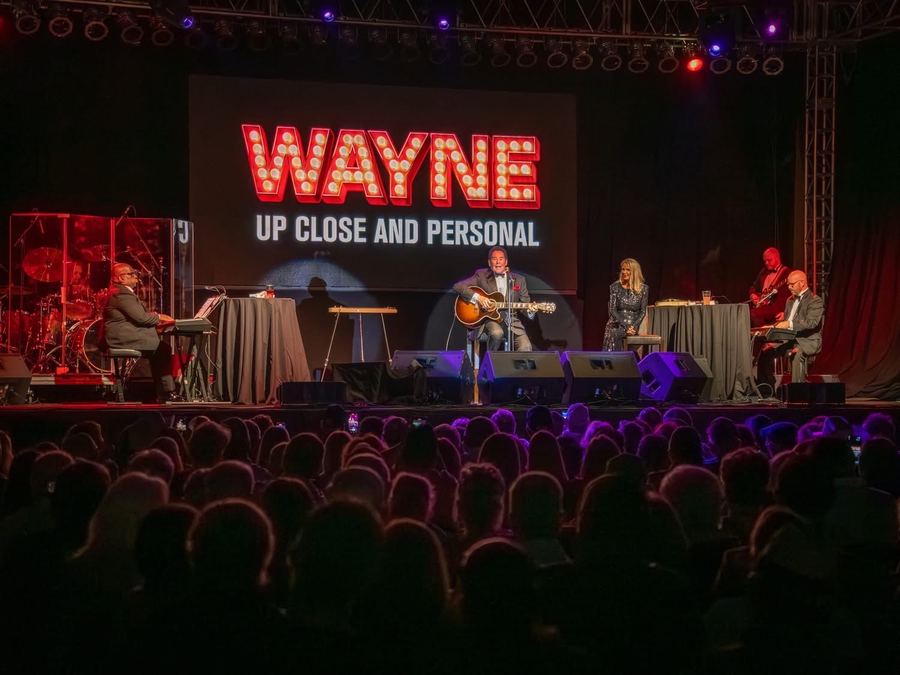
One company owns the gear, the trucks and the crew
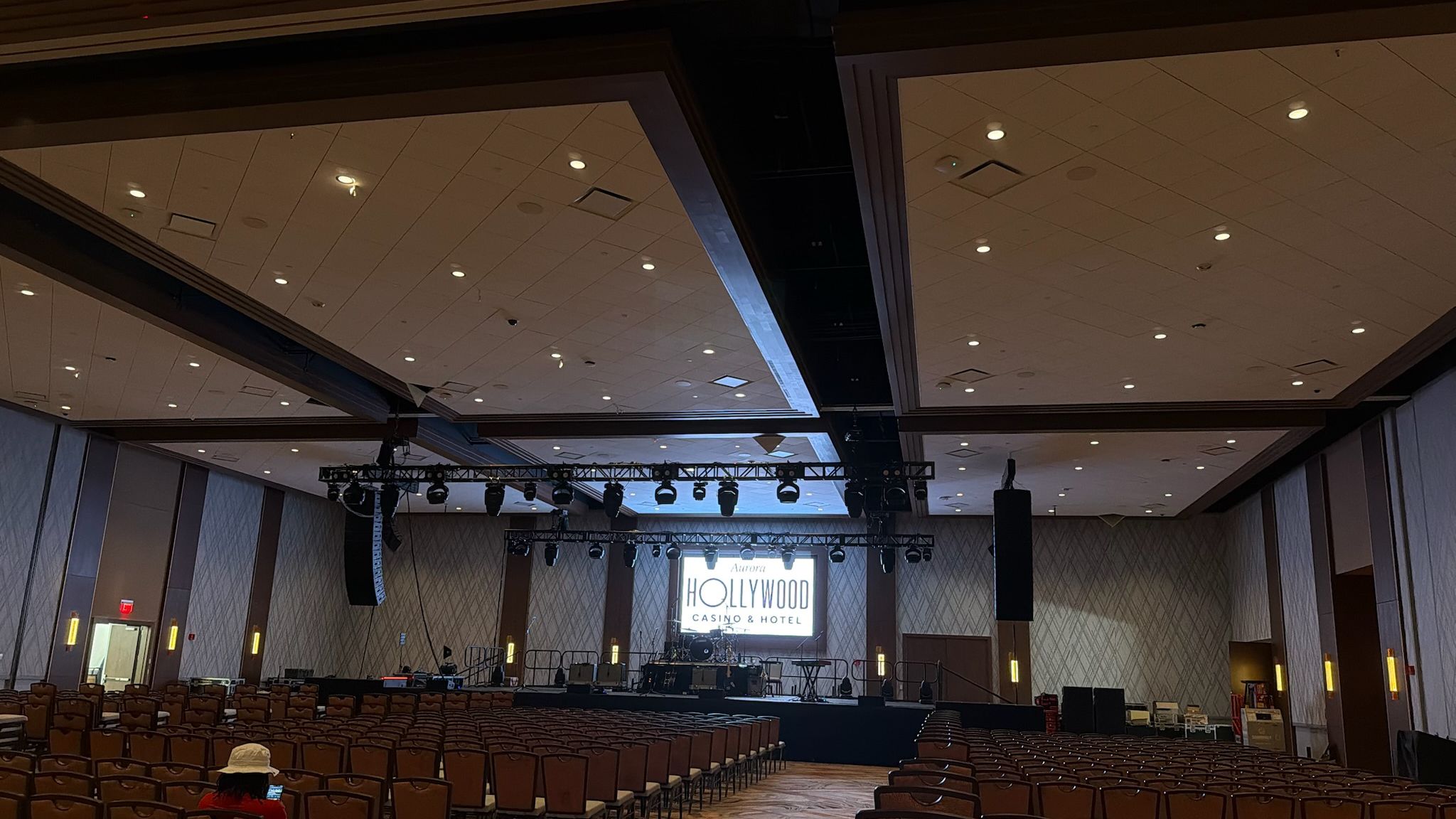
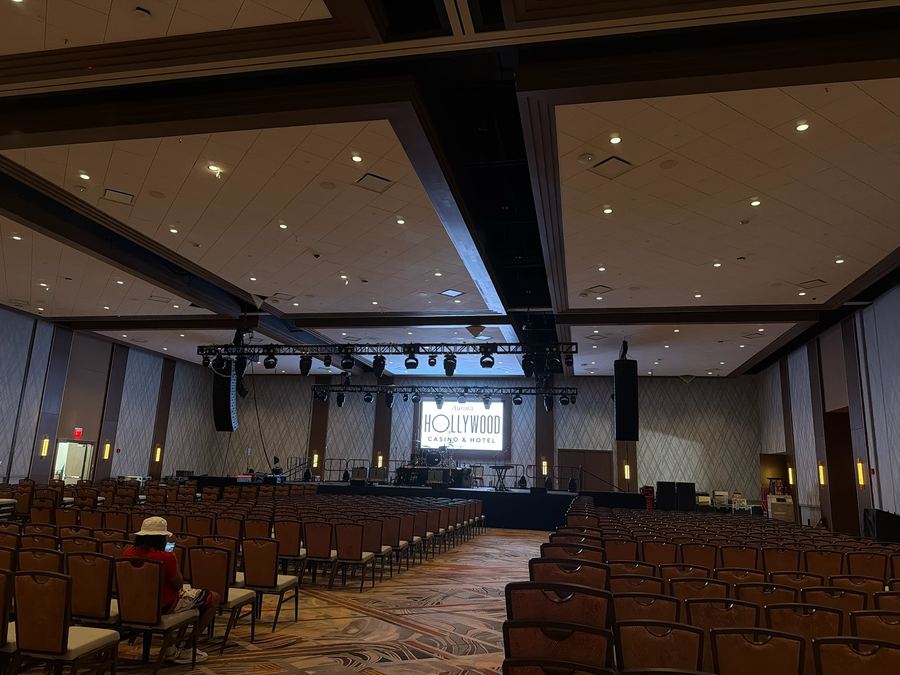
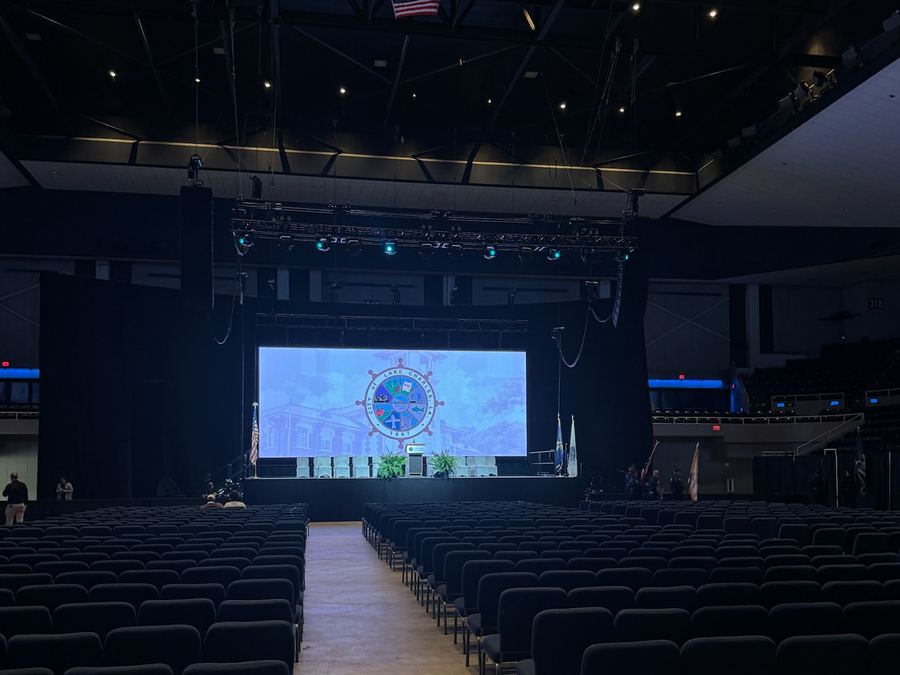
We own our audio, lighting, LED video and staging inventory. We staff our own crews. We run our own fleet across the United States and into Canada.
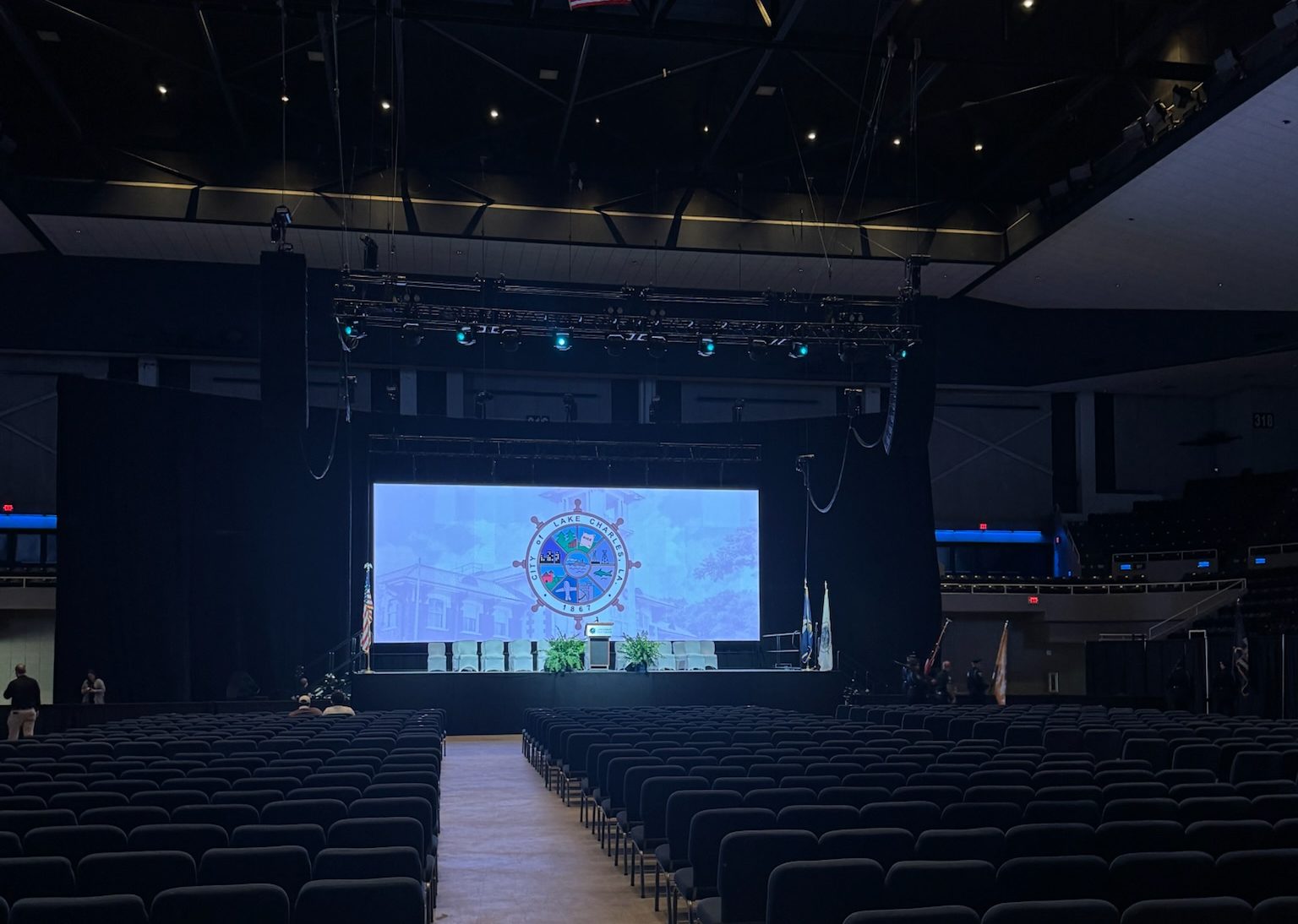
For a convention center, that structure answers the questions that matter on show day: Who owns a problem when a console fails at 4pm the day before doors? We do. When something fails at 4pm on show day, we have a spare in the warehouse.
Your in-house AV team keeps its day rate and its client relationships. We take the shows that need more than the house can carry — bigger rooms, longer runs, heavier rigs.
What that looks like on a festival or tour
Audio
Line arrays, consoles, and coverage for exhibit halls, ballrooms and breakout rooms.
Lighting
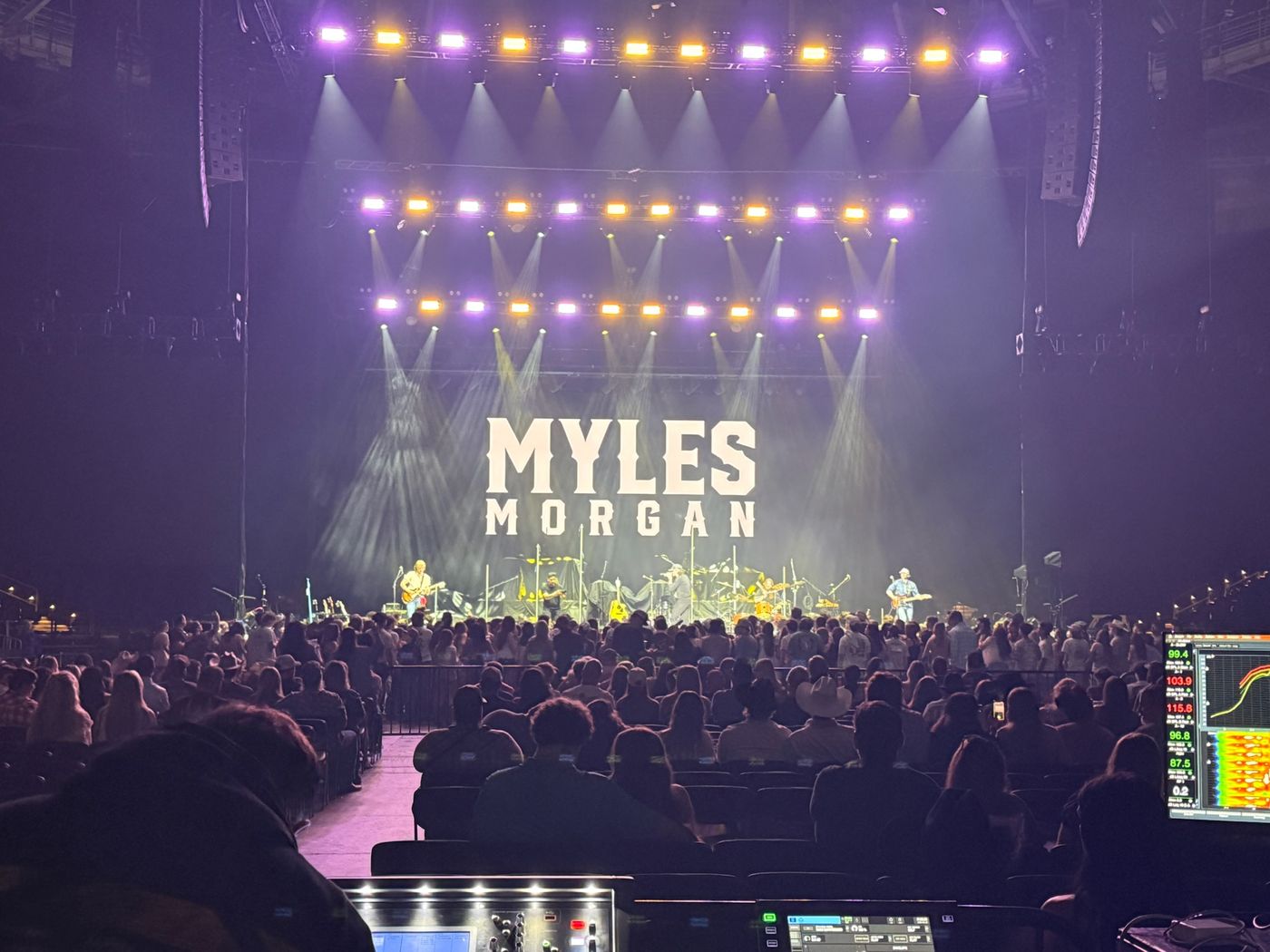
Rigging, truss and fixtures for general sessions, galas and floor activations.
LED Video
Walls and projection sized to the room, driven by a real video workflow.
Staging & Crowd Control
Sets, risers, barricade and decking for halls and lobbies.
The load-in is the product
Convention center work lives and dies on the dock. Union calls, dock schedules, freight elevators, rigging points, power tie-ins, overlapping tenants — the building is never empty and the calendar is never clean.
We plan for that. Site survey first. Then a run of show that accounts for every truck, every case and every hour of your calendar — including the other events in the building. Then execution: doors open on schedule whether or not the building is quiet around us.
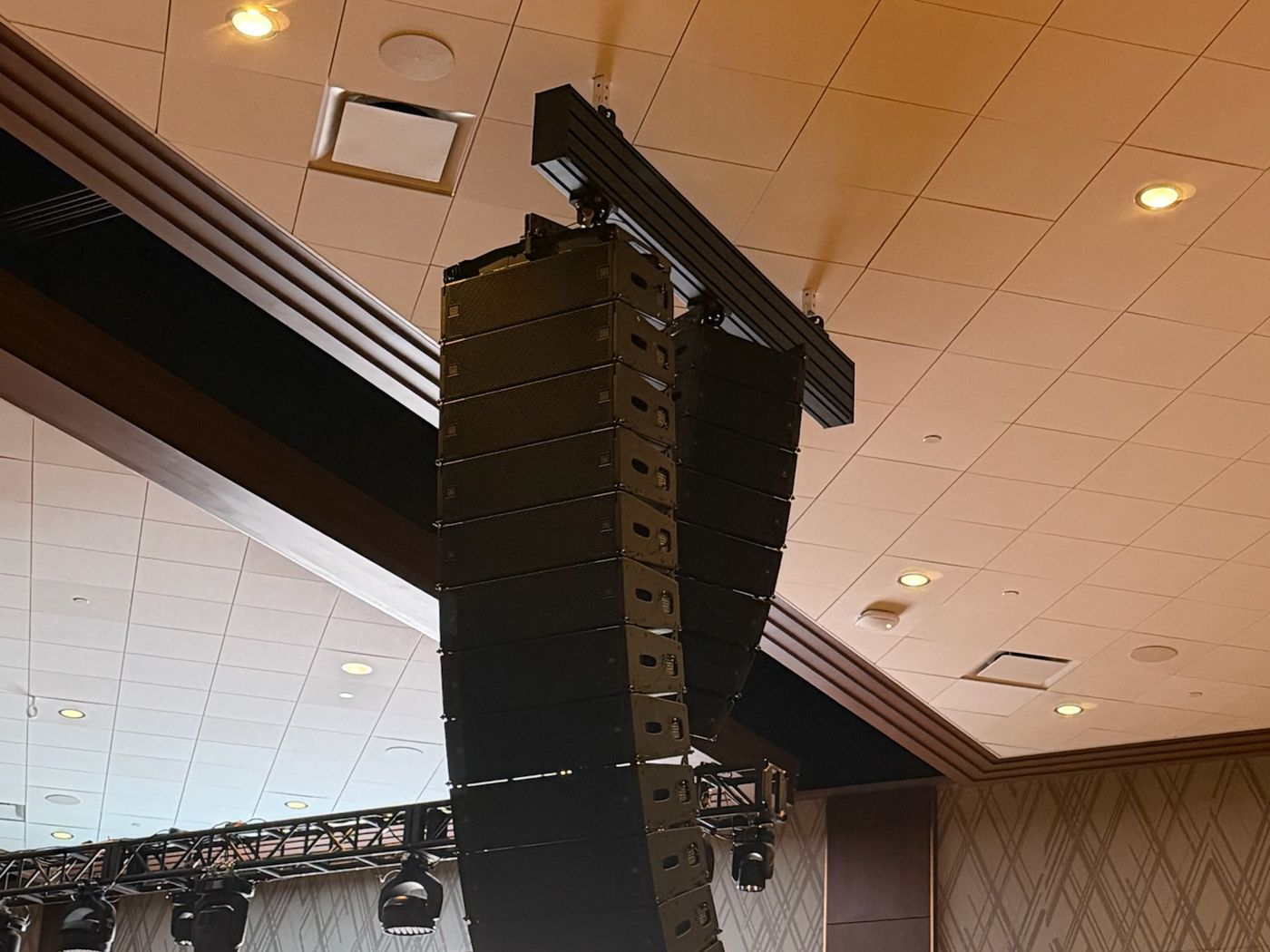
If your house crew prefers to run point on their own gear, we'll work alongside them. If a tenant needs a single dry-hire package and nothing else, Equipment Rental covers that too — production companies, venues and promoters can book gear with or without crew.
Where we work
Home base is Sulphur, LA, in the Lake Charles area. We also operate in Houston, TX and New Orleans, LA. We deliver convention and conference work across the United States and into Canada with our own fleet.
We've produced for venues and organizations including the New Orleans Superdome, NRG Park, NASA Johnson Space Center, Space Center Houston and the Offshore Technology Conference. See the full roster at Clients & Credits →. In 2022 we were named PLSN Regional Lighting Company of the Year at the Parnelli Awards.
What we need from you, and what you get back
01 1. Send the basics
A date, a hall, a rough headcount and what the show needs is enough to start the conversation. A date and a city is enough.
02 2. Site survey & scope
We walk the space — ceiling height, rigging points, power, dock access, house system limits — before we quote anything. Then a written scope and a number, not a range.
03 3. Execution
Our crew loads in, runs the show and loads out. If something changes mid-run — and in a convention center it will — you call the producer whose name is on the scope, and someone answers.
Close-in work is a real part of what we do. If a tenant's vendor has gone sideways on site, call the office rather than using the form. The phone is faster. 337.626.2235.
Why promoters and tour managers call us back
A convention center runs on a calendar that never fully clears. One week it's a general session for two thousand. The next it's a trade show floor, a ballroom breakout, and a gala in the same building. Your production partner has to flex with it — same standard, different scale every time.
More than 30 years of load-ins. We build festival main stages and we build hotel ballroom AV. The scale changes; the standard doesn't.
FAQ
What does a production company actually do inside a convention center?
Everything technical that the house system can't cover: brought-in audio, lighting and LED video, staging and rigging, power distribution, crew and trucking. We handle the shows that exceed the house package or need their own production identity — general sessions, galas, product launches, full exhibit activations.
Can we hire you as a second vendor under our tenant's own production company?
Yes. We regularly work as the labor, trucking or specialty-rigging layer under another production lead. Tell us who's running the show and where the gaps are, and we'll quote our piece of it.
Do you work with our in-house AV and rigging teams?
Yes. House crews know the building; we bring the inventory and the hands. We'll walk the space with your team, agree on who owns what, and build the load-in around the dock schedule you already run.
What's the minimum size show you'll take?
There isn't one. We've built arena shows and we've built a single breakout room with a screen and two speakers. If the show needs to be done right, it's worth a conversation.
How far in advance should a convention center book production?
Earlier is better, especially for multi-hall shows that need rigging plans and power studies. But short-notice is part of our normal work — if a tenant's vendor has dropped out on site, call us and we'll tell you straight what's possible.
Do you hold gear locally, or does it come from Sulphur?
We operate from Sulphur, LA, with locations in Houston, TX and New Orleans, LA, and we truck on our own fleet. Where your building sits on that map determines what's already close by — tell us the date and we'll tell you what that means for your load-in.
Tell us the date, the hall,
and what the show needs.
We'll walk the space, send you a written scope and a number, and take it from there. A real producer, not a form response.