
Sulphur, LA — 30.23° N / 93.37° W
LED video walls and event video, designed for the room you're actually in.
Deep South Productions owns its LED inventory and designs the whole video system around the event — screen size and placement, pitch, structure, processing, playback, cameras and content workflow — then sends the crew who built it to run it. One company is accountable from the drawing to the last panel in the case.
Most video problems on a live event aren't about the panels.
Most video problems on a live event aren't about the panels. They're about the decisions made before the panels showed up: the wrong pixel pitch for the seat distance, a screen sized for a rendering instead of a sightline, a processing chain nobody tested until doors, content delivered in a format the media server never liked.
Deep South Productions owns its LED inventory and designs the whole video system around the event — screen size and placement, pitch, structure, processing, playback, cameras and content workflow — then sends the crew who built it to run it. One company is accountable from the drawing to the last panel in the case.
We carry over 2,000 LED panels in 3.9mm to 5.9mm pitch, with more inbound. Two cabinet formats — 500x1000mm and 600x1200mm — which gives us flexibility in how a wall gets shaped and how it flies. That inventory sits in our own warehouse, gets tested in our own shop, and moves on our own trucks.
Screen configurations
Main screen, side screens, upstage walls, downstage headers, and set pieces. We build straight walls, curved walls, columns, tunnels, and irregular creative builds where the LED becomes the scenic element rather than a rectangle behind the band. If the design calls for a shape, the question is structure and processing, not whether it can be done.
Ground support or flown
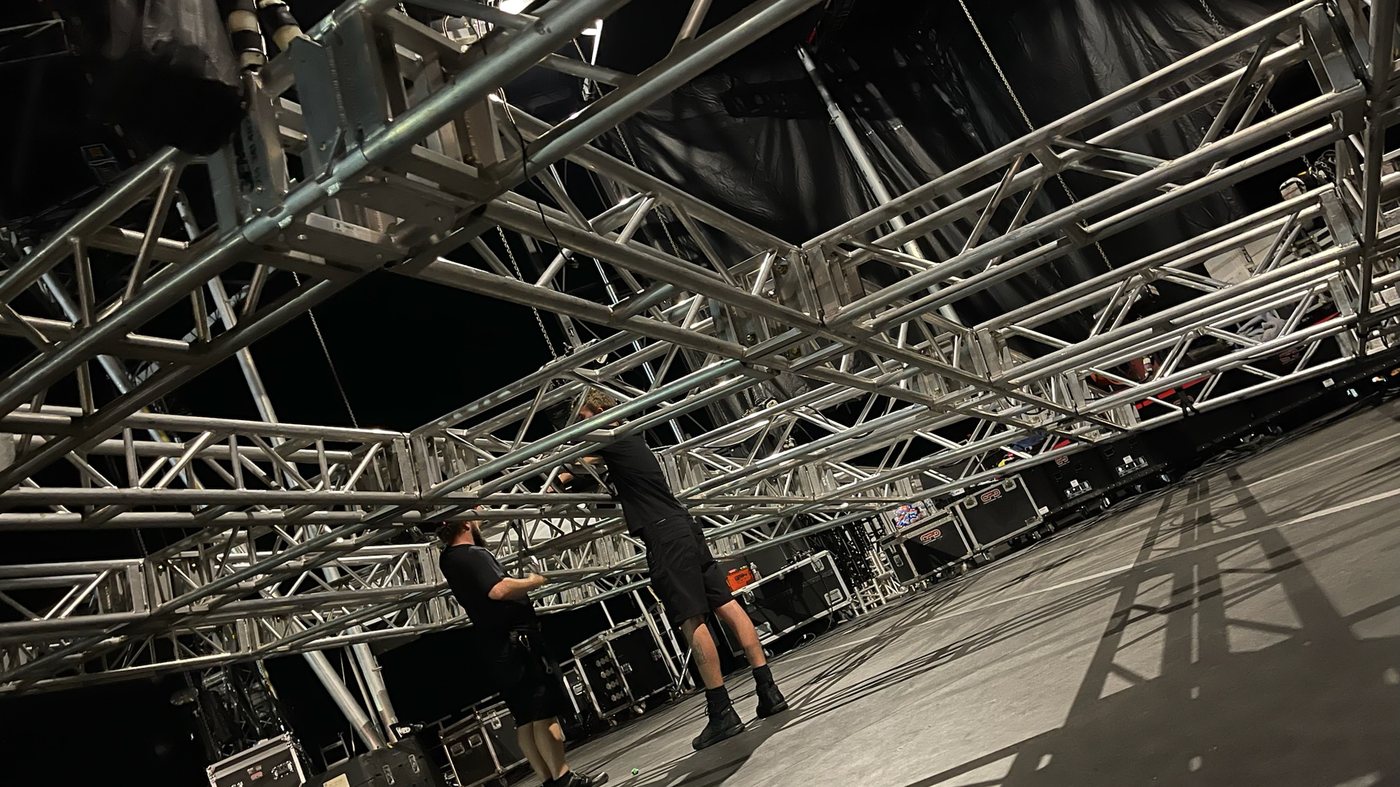
Ground-support tower systems for outdoor and festival applications, where wind load, ballast and site conditions drive the engineering. Flown walls where the venue and the design allow it. Rigging is coordinated capability: we self-perform limited, safe applications and bring in qualified specialists for larger or higher-risk structural and arena work. That decision gets made in advance, in writing, not on a loading dock.
Pixel pitch and viewing distance
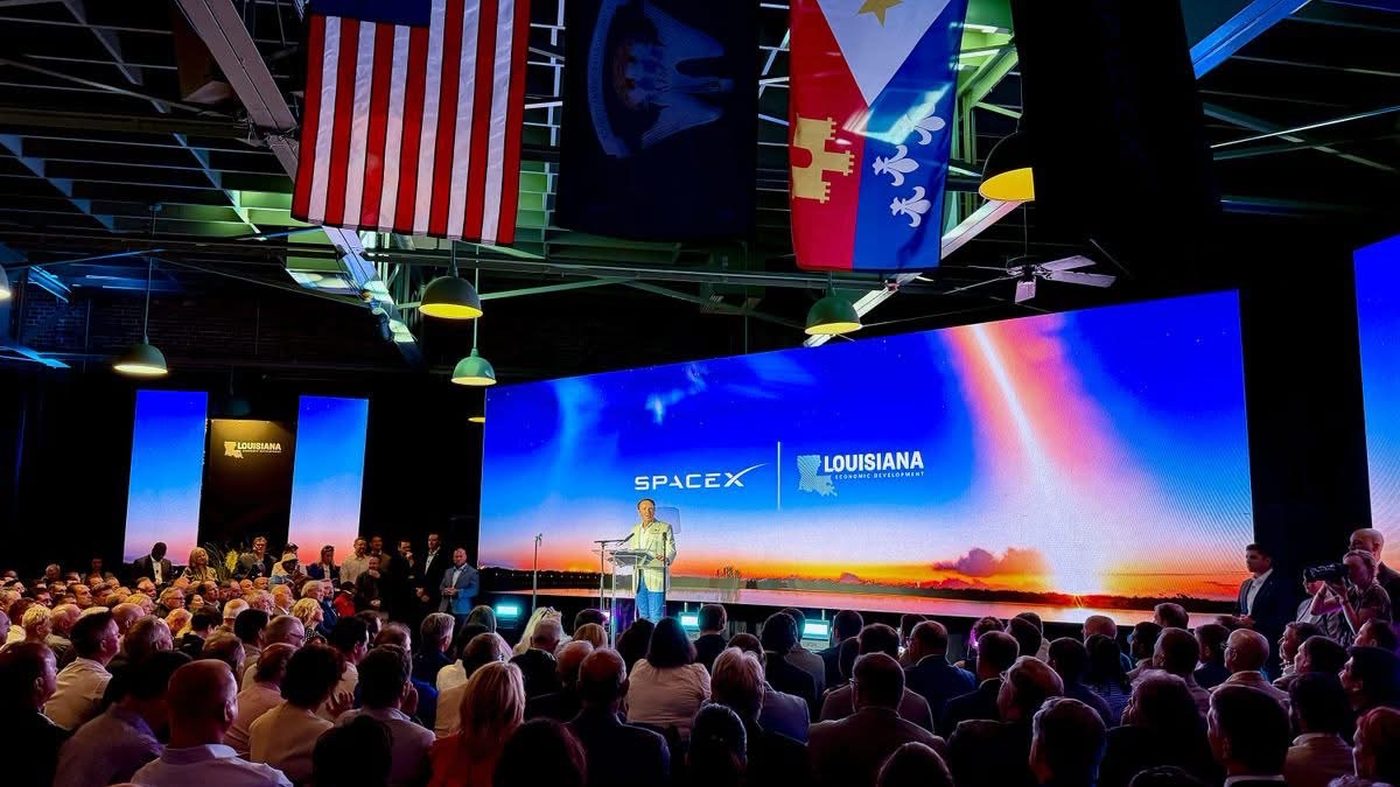
Pitch selection is a seat-distance problem. A 3.9mm wall is the right call for a corporate general session where the front row is fifteen feet from the screen and the content is typography and data. For a festival IMAG screen where nobody is closer than sixty feet, tighter pitch buys you nothing but budget. We size pitch to the closest viewer, then check it against the furthest, then check both against the content that's actually going to play.
Processing and playback
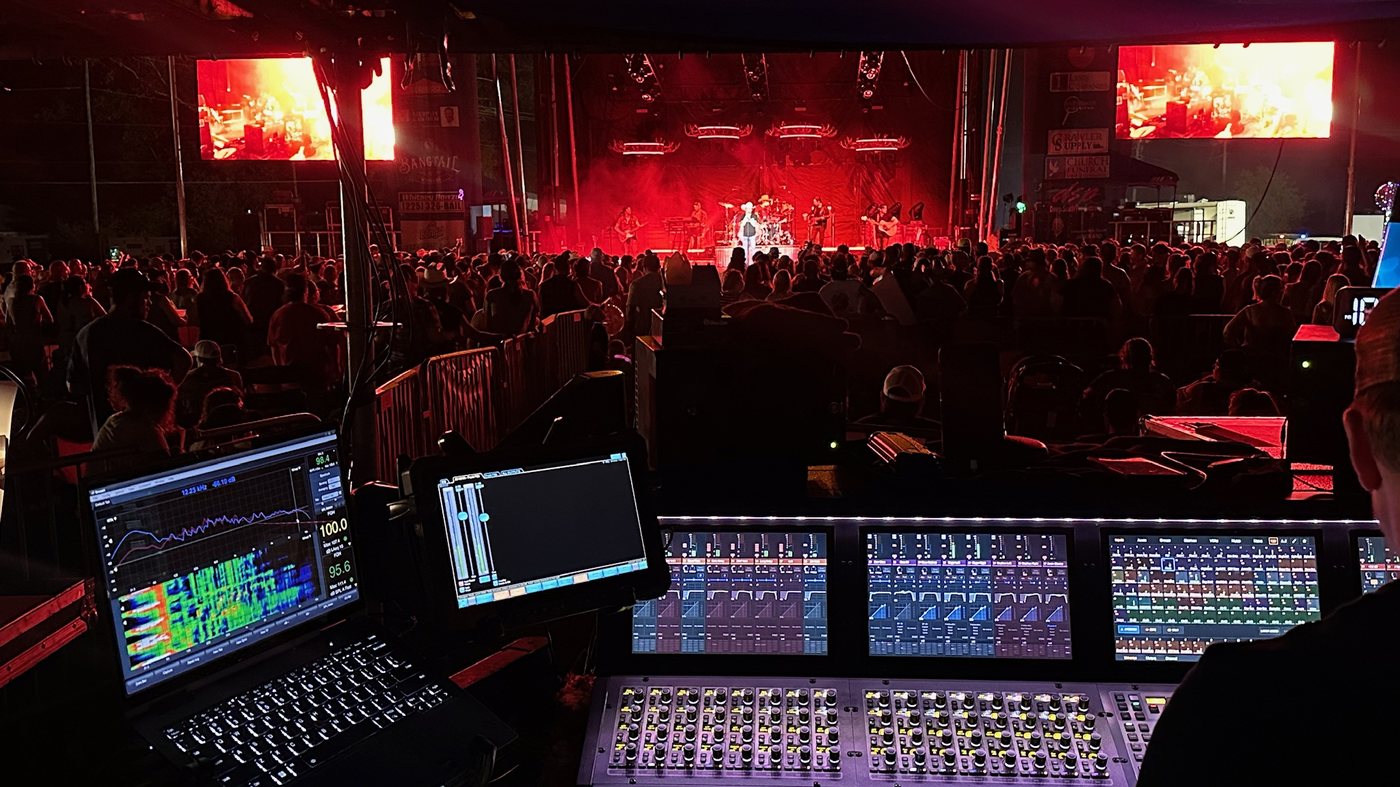
Processing, scaling, switching and redundancy built for the show's risk level — a single-presenter breakout doesn't need what a broadcast-adjacent general session needs. Playback for presentations, video roll-ins, walk-in loops, sponsor reels and show graphics.
Cameras and IMAG
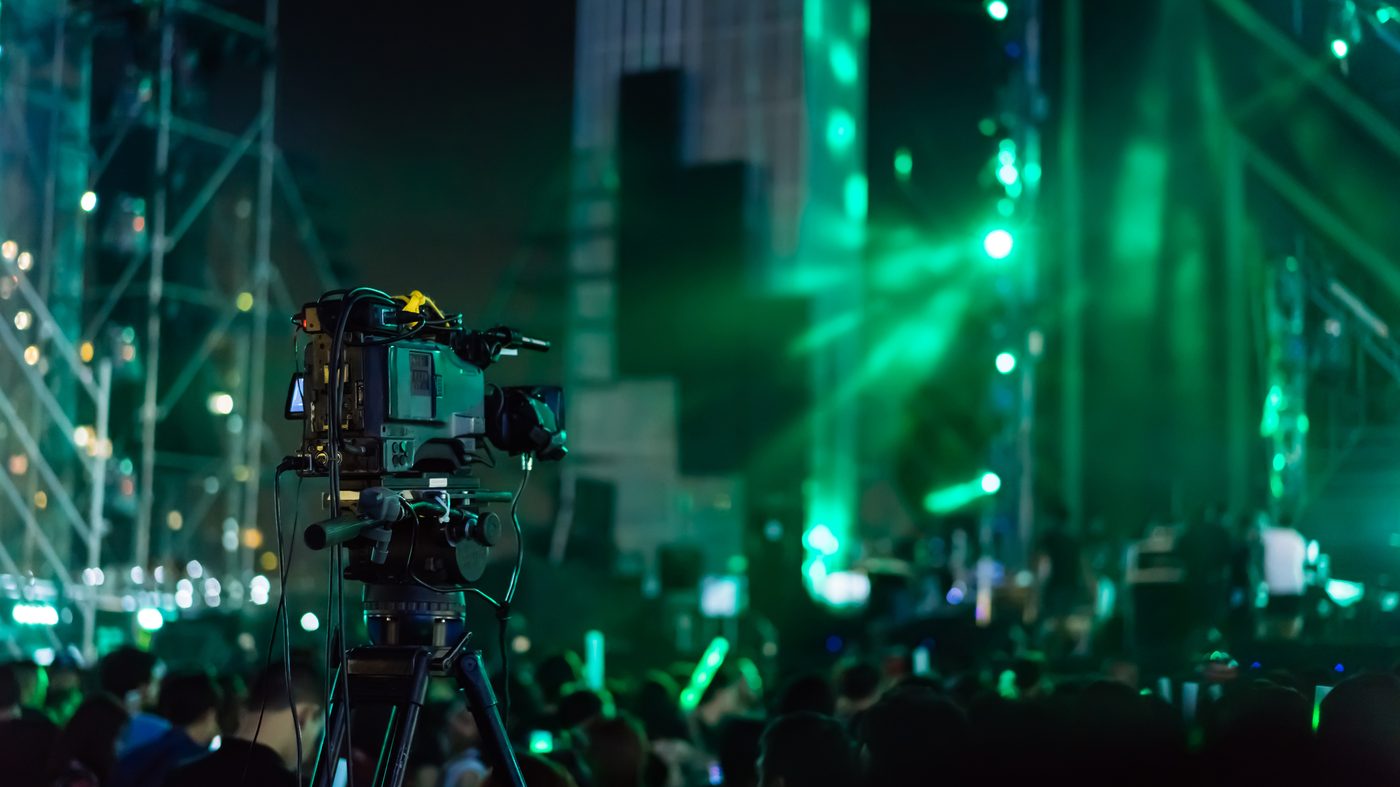
Camera packages with switching, so the people in the back of the room can see faces instead of shapes. Configurations from a single locked-off camera and a switcher for a keynote through multi-camera IMAG for a festival main stage, including operators.
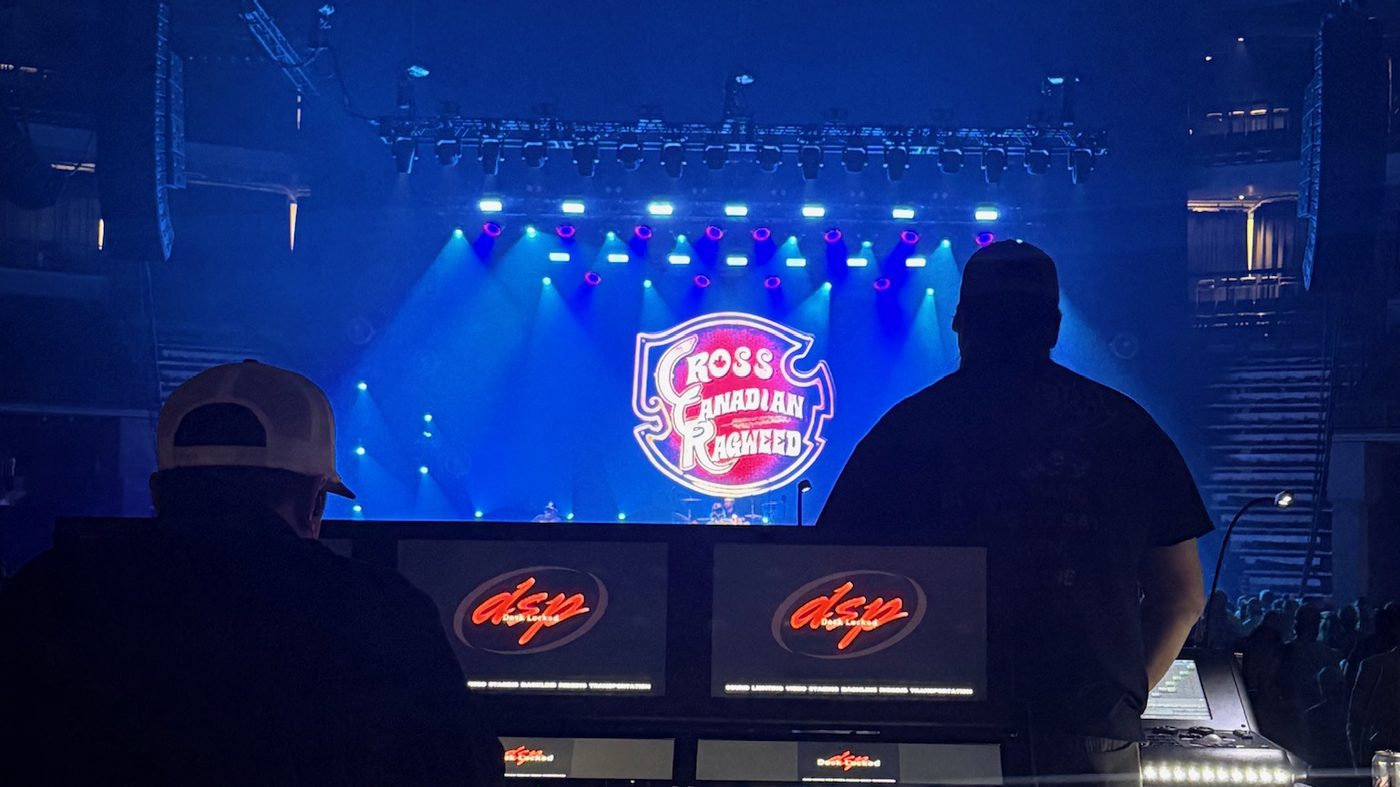
Content and media servers
We take content in the formats your team already works in, test it on the actual processing chain before show day, and tell you early if the aspect ratio, frame rate or resolution is going to fight the wall. For creative builds and non-standard canvases, we map the content to the screen rather than asking your designers to guess.
Outdoor, brightness and weather
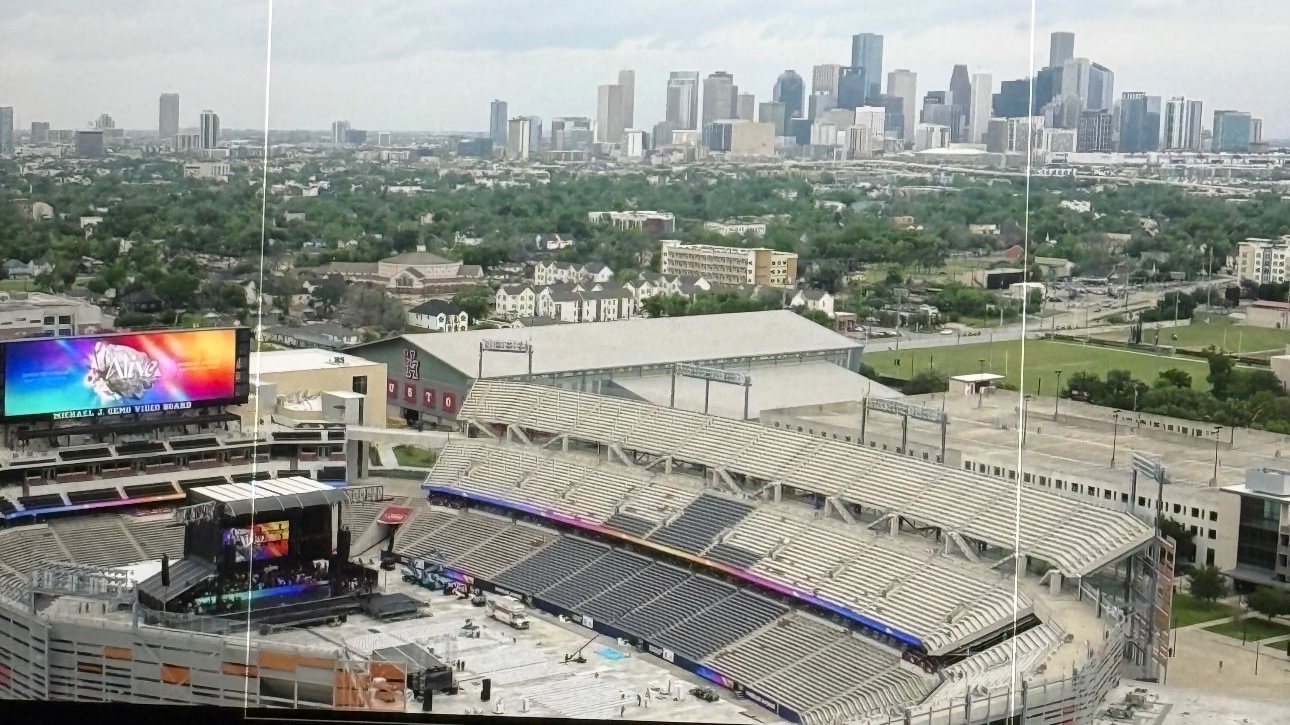
Outdoor LED is a different job. Daytime brightness, sun angle on the screen, rain, and wind all get planned for before load-in. Our outdoor screens are specified for daylight legibility, and our site plans account for the weather calls that come with an open field in the Gulf South in July.
Mobile LED
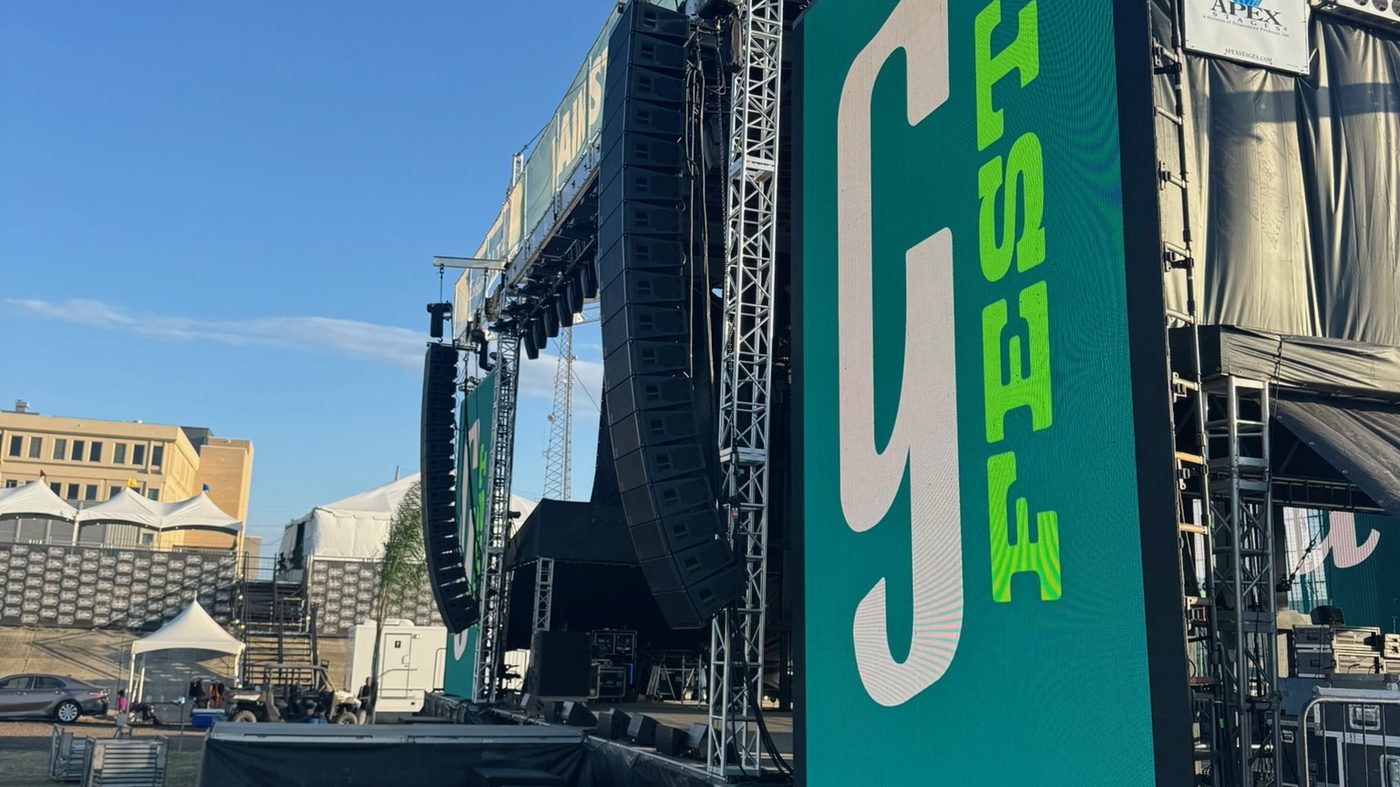
We run mobile LED trailers for events where a deployed wall isn't practical — parades, rodeos, ballfields, community events, and sites where the screen needs to be up and showing in hours rather than a day.
The events we do this for
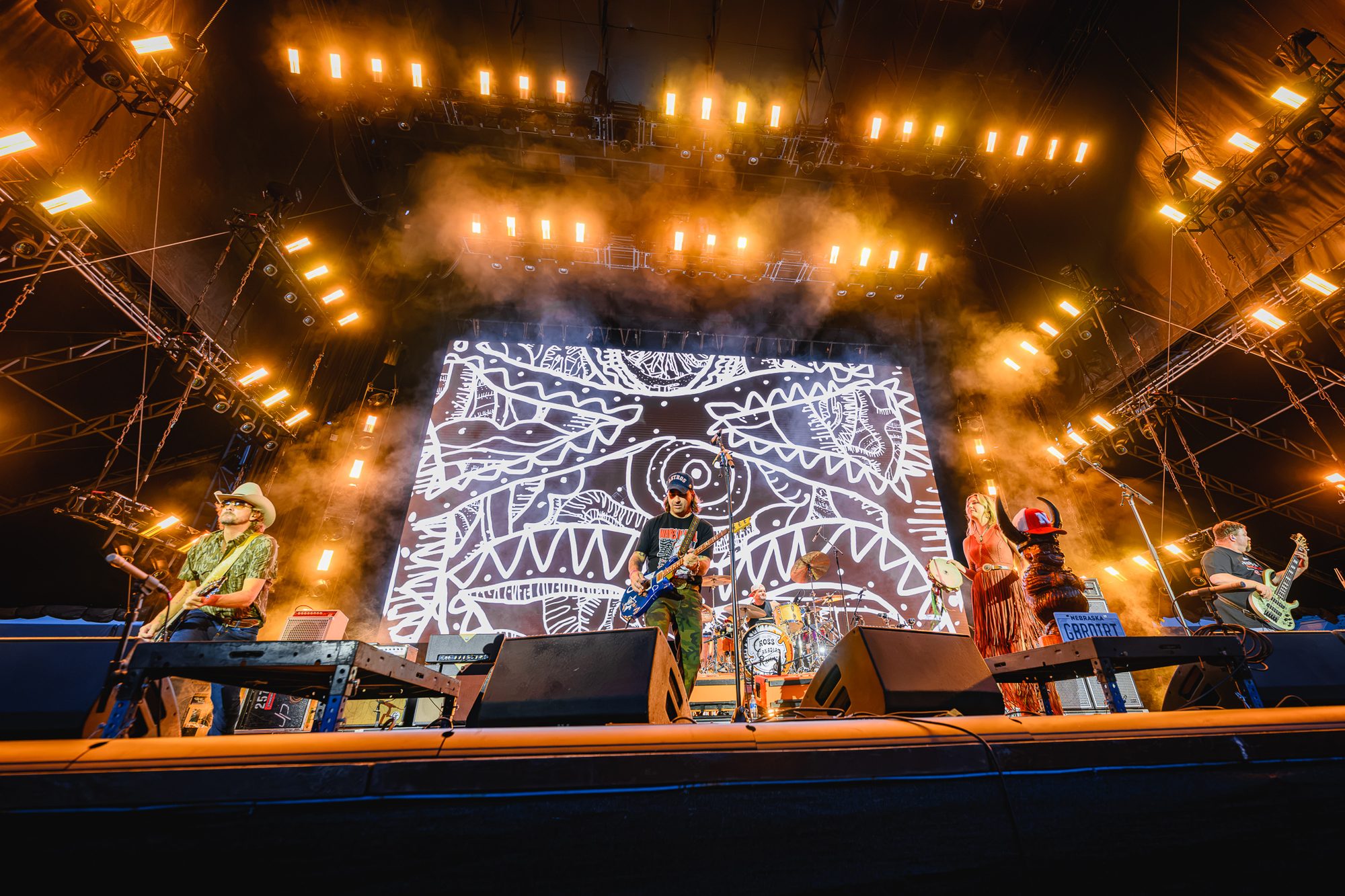
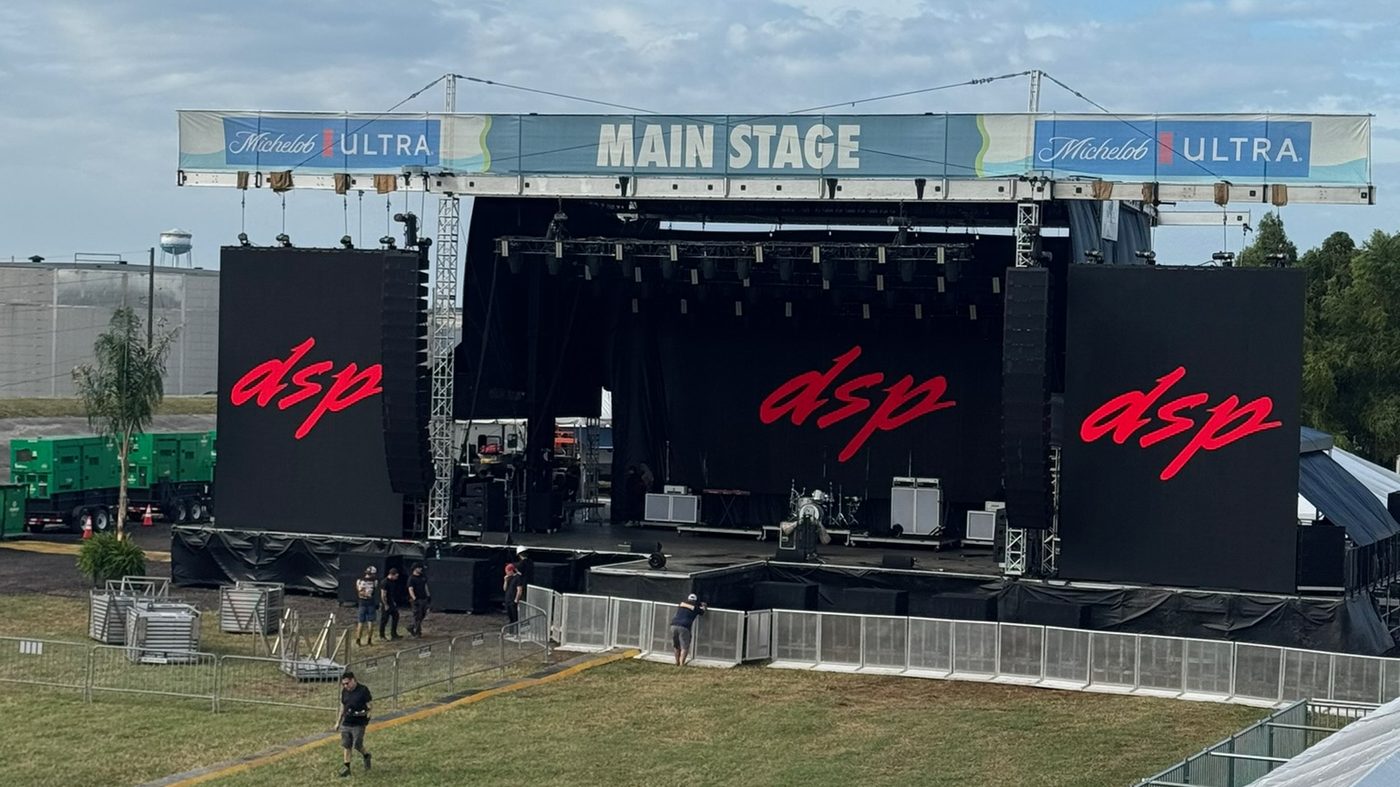
Festivals and outdoor concerts
Main stage IMAG with side screens on ground support, multi-camera switching, sponsor content between sets, and a crew that can hold the call when weather moves in.
Corporate general sessions
A tight-pitch main screen sized to the ballroom, confidence monitors, presentation playback, speaker support and rehearsal time built into the schedule. Breakout rooms scaled down without being treated as an afterthought.
Houses of worship
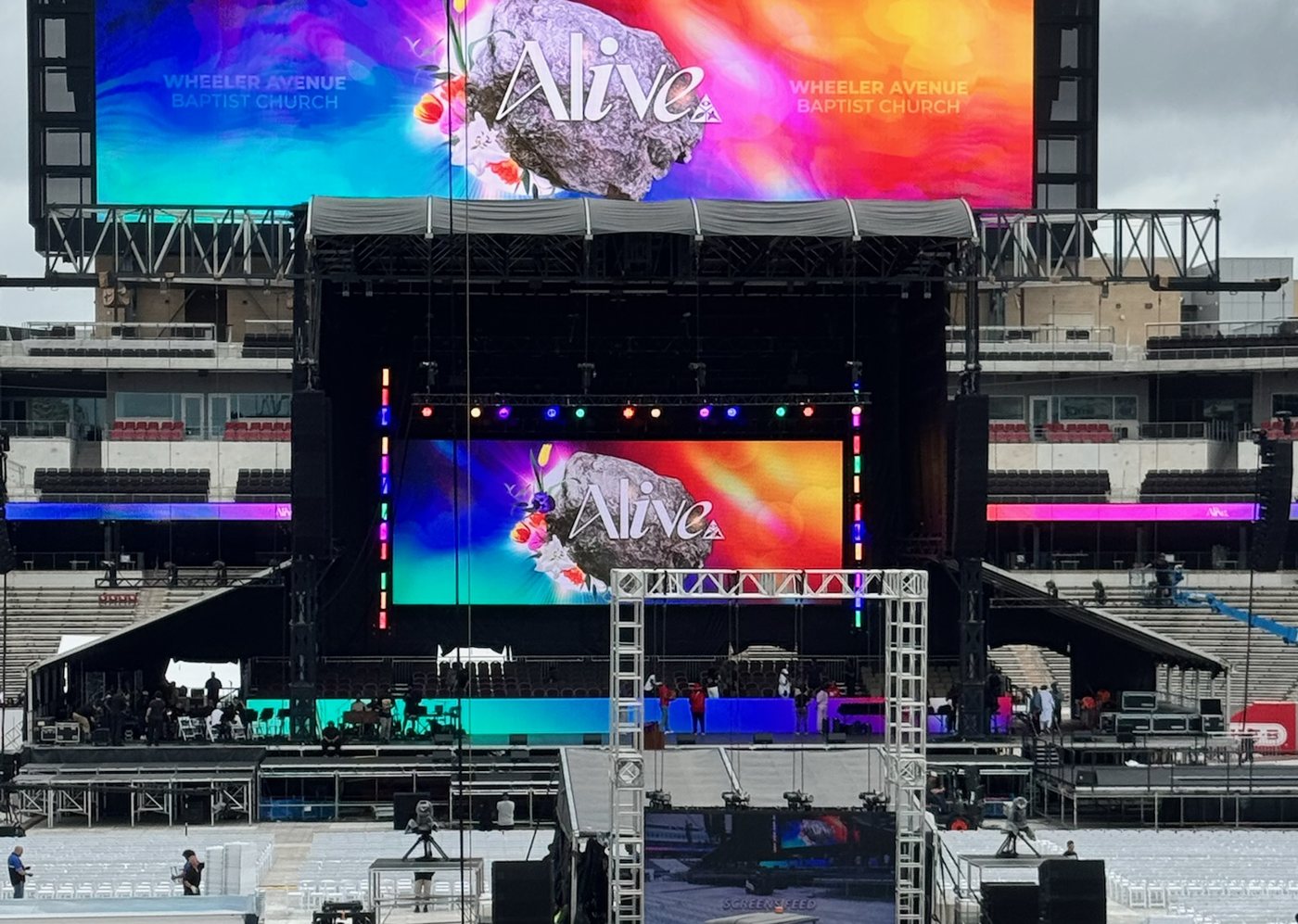
Weekend services, conferences and holiday productions, including temporary walls for special services and support for venues evaluating a permanent install.
Sports and collegiate venues
Videoboards for events, tunnel and entrance builds, fan-zone screens and activations around game day.
Brand activations and public events
Creative builds where the LED is the environment: columns, arches, tunnels, and freestanding structures.
Where we work
Home base is Sulphur, Louisiana, in the Lake Charles area. We work regularly across the Gulf South — Houston, New Orleans, Baton Rouge, Dallas, Bossier City — and nationally across the United States and into Canada. LED moves on our own fleet, which matters more than it sounds: the panels, the structure, the processing and the crew leave the same building at the same time.
FAQ
How much does an LED video wall cost to rent?
It depends on size, pitch, structure and crew — a 12x7 ft ground-supported screen for a single-day outdoor event and a 40 ft main-stage wall with multi-camera IMAG are different orders of magnitude. Send us the venue, the date, the audience size and the furthest seat, and you'll get a real number rather than a range.
What pixel pitch do I need?
Start with how close the nearest viewer will be. Tighter pitch (3.9mm) for close-viewing indoor screens and detailed content; wider pitch (5.9mm) is fine and more cost-effective for large outdoor screens viewed from distance. We'll recommend a pitch once we know the room and the content.
Can LED walls be used outdoors and in the rain?
Yes, with the right screen, the right structure and a weather plan. Outdoor builds are engineered for wind and ballast, and we set thresholds for wind speed and conditions with the promoter before load-in.
What's the difference between ground support and flying the screen?
Ground support carries the wall on a tower structure from the deck up — standard for outdoor and for venues where rigging points aren't available. Flying hangs it from the structure overhead, which frees up floor space but depends on the venue's rigging capacity and the appropriate structural sign-off.
Do you provide cameras and IMAG operators, or just the screen?
Both. You can take the wall and processing supported by our techs, or a full video package with cameras, switching, operators and content playback.
What content format should we send you?
Send us the native files as early as you can and we'll confirm resolution, aspect ratio and frame rate against the actual screen and processing chain. For non-rectangular or creative builds we'll provide a canvas template so your designers aren't guessing.
Can we rent LED without a full production package?
Yes. We provide equipment packages to production companies, venues and promoters, usually supported by our technicians. See Equipment Rental.
Tell us
what has to be seen.
Send the venue, the date, the audience size and where the furthest seat is. We'll come back with a configuration, a pitch recommendation and a number.