

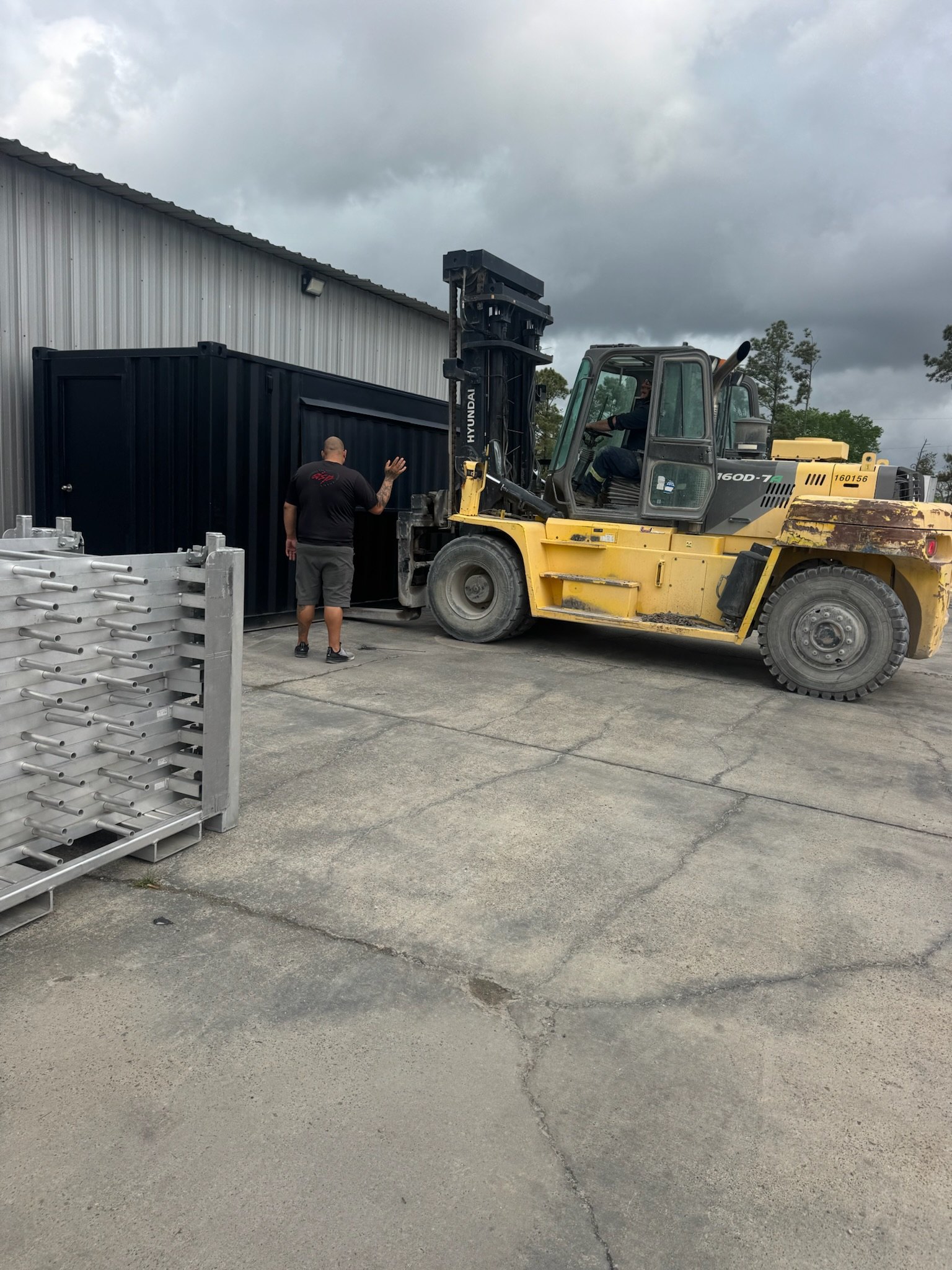
Sulphur, LA — 30.23° N / 93.37° W
Power and cooling that shows up.
Generators, power distribution and event cooling come from us the same way audio and lighting do: we own the gear, we run the site survey, we write the scope, and one company is accountable from the first cable run to the last truck off the lot.
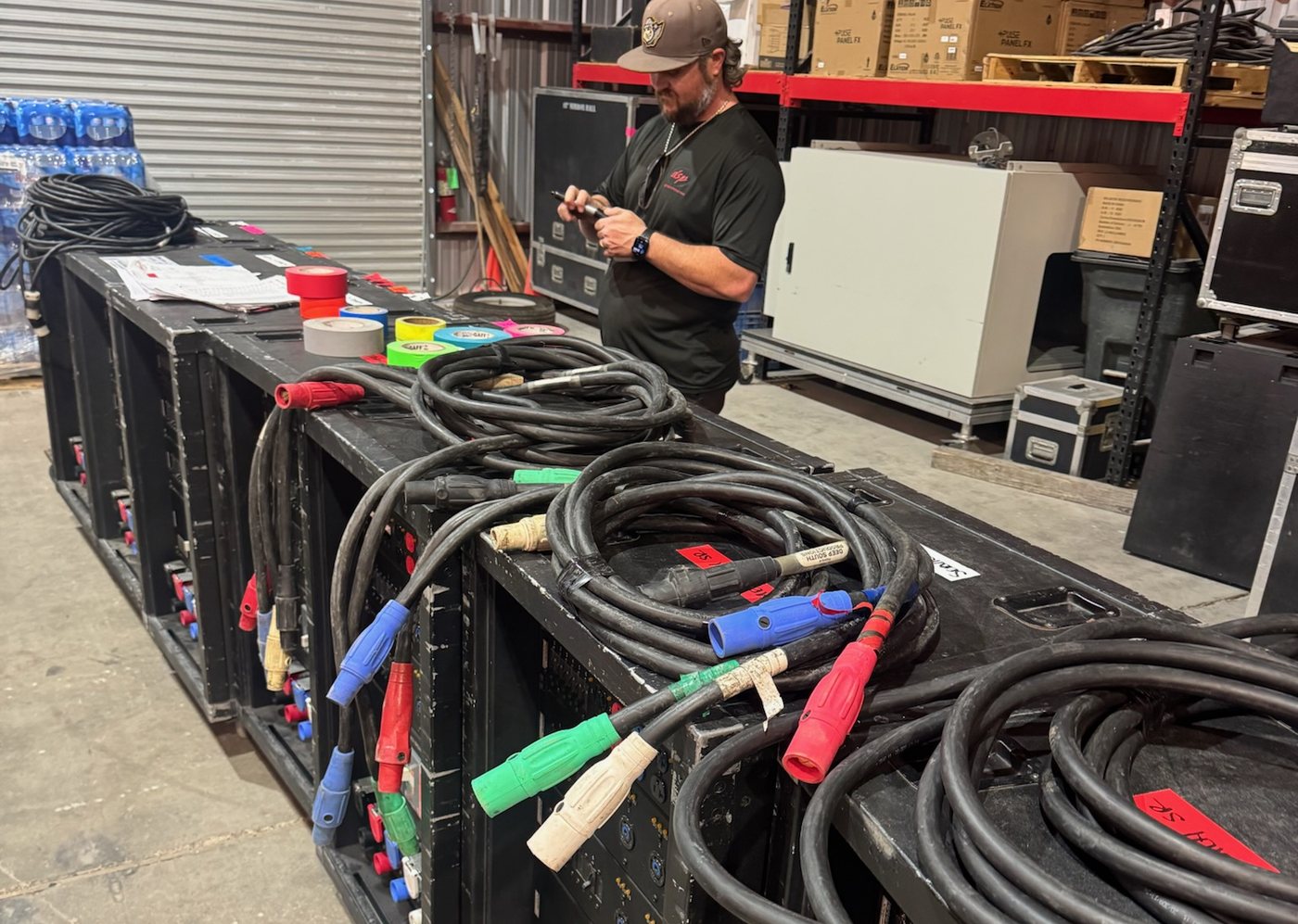
Every event runs on temporary power.
Every event runs on temporary power. Sound, lights, LED video, catering, comms, box office — all of it draws from somewhere. If that somewhere fails, the show stops. We treat power as production, not a line item someone else figures out the week of load-in.
Generators, power distribution and event cooling come from us the same way audio and lighting do: we own the gear, we run the site survey, we write the scope, and one company is accountable from the first cable run to the last truck off the lot.
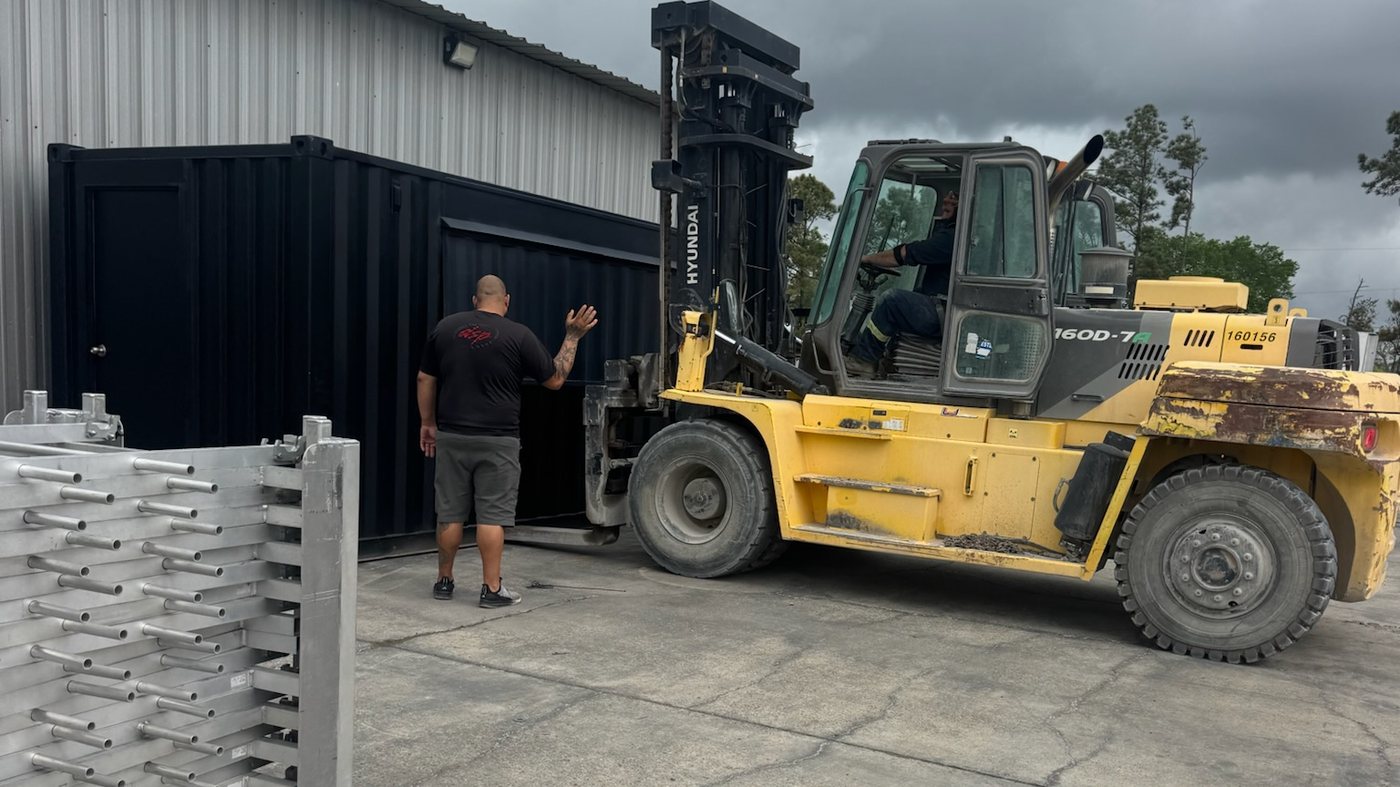
Generators from 100 kW to 500 kW
That range covers a single general session and a full festival site, and everything between. Units are sized to the real load, not the rounded-up guess, placed where trucking and cable runs allow, with fuel planning built into the run of show.
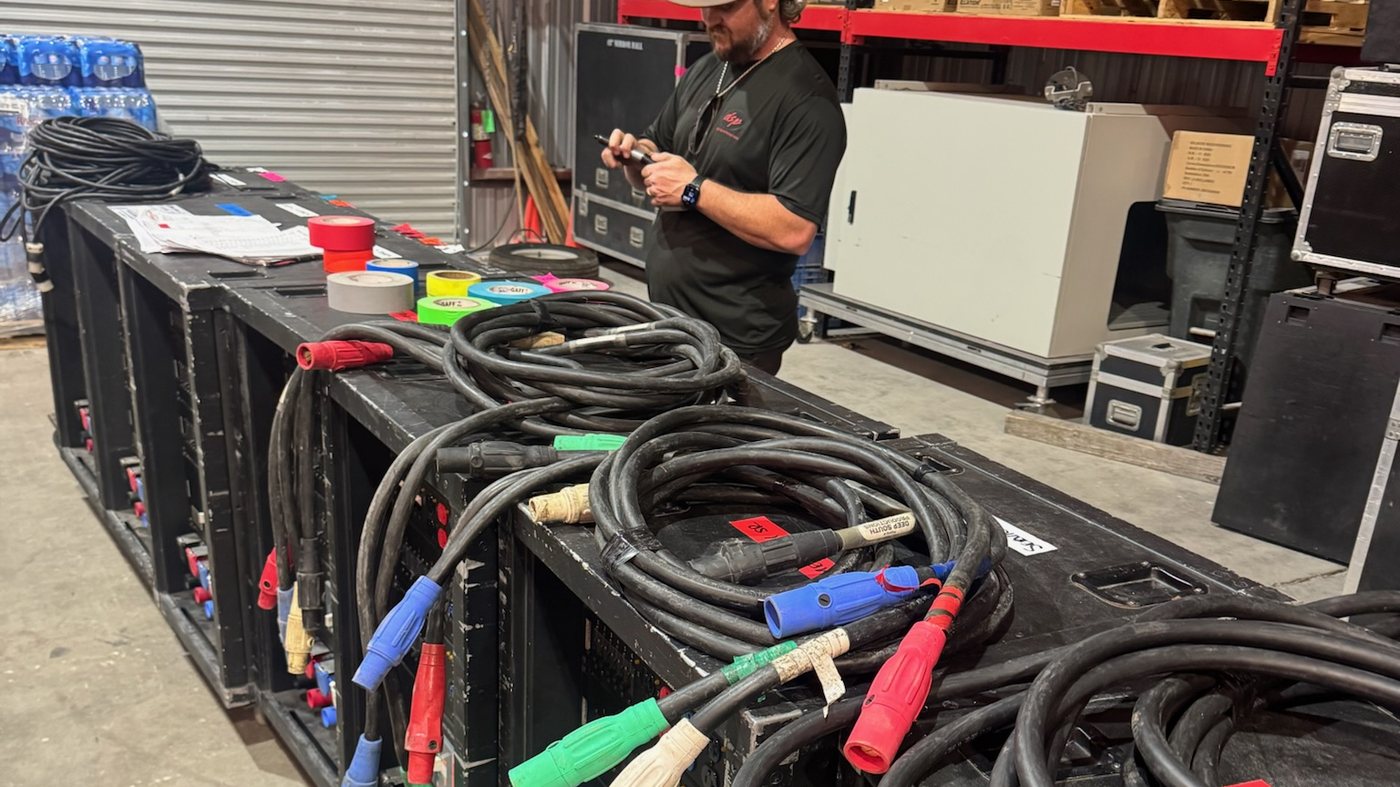
Power distribution
Feeder cable, distro, and the discipline that comes with it — circuits labeled, loads balanced, and runs dressed so nobody trips over a loom backstage.
Event cooling
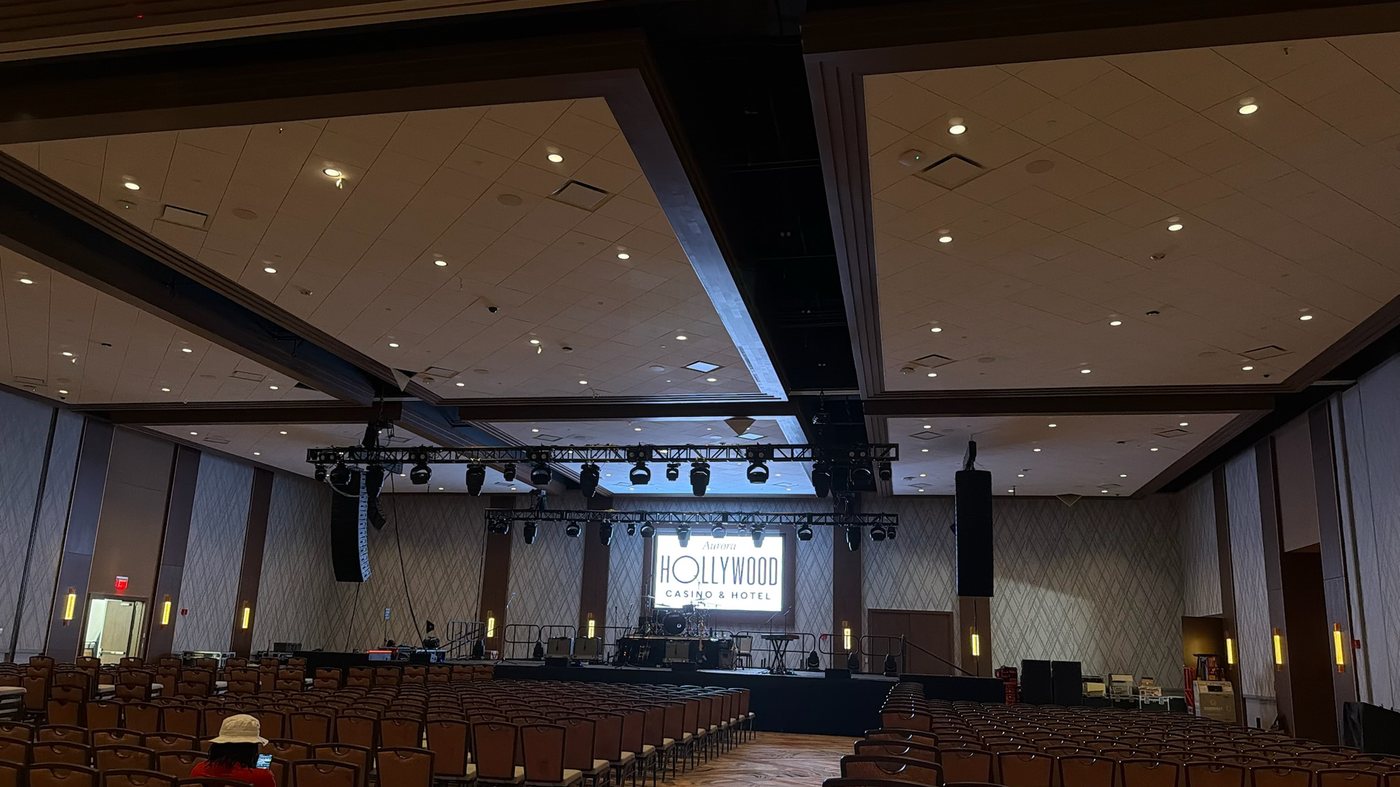
Gulf South summers are not a suggestion. We handle temporary cooling for tents, ballrooms, backstage areas and production offices, planned around the same load calculations as everything else.
Show day support
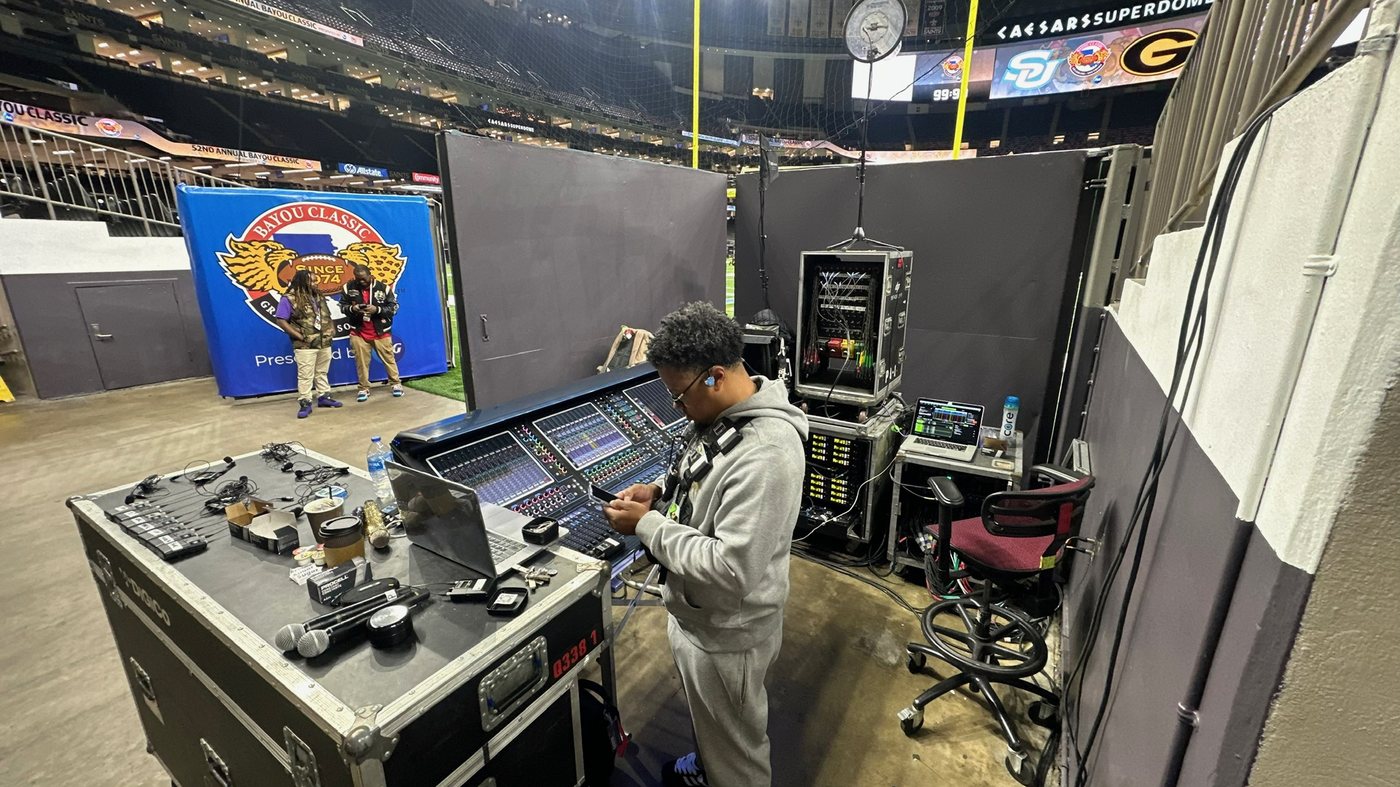
Power isn't a set-and-walk-away service. If something fails on site, we respond — the same crews who installed it are the ones on the radio when it matters.
One accountable company
Here's the difference between hiring a power vendor and hiring a production company.
When someone else supplies your generator, the conversation on show day goes like this: their tech blames your lighting vendor, your lighting vendor blames the generator, and you stand in the middle. We've all watched it happen.
When we supply it, that conversation doesn't happen. The generator, the distro, the audio, the lighting, the LED video — it's our gear, our crews, our power plan. If a draw changes because a lighting rig was re-specced, the power plan changes with it. No vendor calls. No finger-pointing. One number to ring.
That's what "one company is accountable" means in practice. It matters on every service we sell. It matters most on power, because power is the thing everything else plugs into.
Built for festivals, sized for ballrooms
Festivals and outdoor events
Multi-day power for stages, vendor rows, backstage, production and site lighting. Planned around load-in, show days and load-out as one continuous power schedule. Festival Production →
Tours and one-offs
A generator, a distro package and a tech on a single show day, anywhere in the US or into Canada with our own fleet. Touring Production →
Corporate and private sites
General sessions, brand activations and events in rooms that were never built for production loads. Quiet placement matters here, and so does a power plan that doesn't announce itself. Event Production →
Stages, wherever they land
Power planning is part of every mobile stage we deliver — the stage and the power that feeds it arrive as one scope, not two.
Redundancy is the plan
We won't promise that nothing ever fails. Nobody honest can. What we can promise is that failure has been planned for.
When something fails at 4pm on show day, we have a spare in the warehouse. That's the philosophy across our inventory, and power is no exception. Critical runs get backup. Fuel gets scheduled before it gets urgent. Loads get monitored, not assumed.
More than 30 years of load-ins teaches you one thing above all: the event that runs clean is the one where somebody planned for the event that doesn't.
How the scope gets written
It starts with a conversation, not a pitch. Tell us the date, the city, the venue and roughly what you're trying to do. If you have a rider or a stage plot, send it. If you don't, that's fine — most of our work starts before paperwork exists.
From there:
1. Site survey — we look at the room or the site, the access, the distances and the existing power. 2. Load calculation — everything that draws power, added honestly, including the stuff that always gets forgotten. 3. Written scope and a number — gear, crew, fuel, timeline. No ranges disguised as quotes. 4. Execution — our crews install, monitor and stand behind it through load-out.
We'll tell you if your power needs are bigger than you think, or smaller. Both happen. Either way you'd rather know before the trucks roll than during.
Site survey
we look at the room or the site, the access, the distances and the existing power. 2. Load calculation — everything that draws power, added honestly, including the stuff that always gets forgotten. 3. Written scope and a number — gear, crew, fuel, timeline. No ranges disguised as quotes. 4. Execution — our crews install, monitor and stand behind it through load-out.
Dry-hire for production companies
If you're a production company, venue or promoter and you just need the gear, we do that too. Generators and distro packages, with or without crew, quoted alongside the rest of your equipment rental. Tell us the gear, the dates and where it's going.
If the power package is part of a bigger job — staging and crowd control, rigging and truss, logistics and trucking — we'd rather quote it as one scope. Fewer handoffs, fewer gaps, fewer surprises on the invoice.
FAQ
What is event cooling?
Temporary climate control for event spaces — tents, ballrooms, backstage areas, production offices and vendor areas — where the building's own HVAC doesn't exist or can't handle the load. It's planned and powered like any other part of the production, with its own load calculation and its own place in the run of show.
What size generator do I need for my event?
It depends on what's drawing power and for how long — a 100 kW unit covers a lot of single-stage work, and a festival site with vendor rows and production offices can climb toward 500 kW. Send us the date, the venue and what's running, and the load calculation will give you the answer instead of a guess.
Do you provide fuel, or do we arrange it?
Fuel planning is part of our scope. A generator that runs dry at 8pm isn't a fuel problem, it's a planning problem, and it's the kind of thing we schedule for before it can happen.
Can you power just my stage while another company handles the rest of the site?
Yes, and it's a common ask. Tell us where the boundaries are — who supplies what, and where the handoff happens — and we'll plan to it. The cleaner the handoff is defined, the fewer problems show day holds.
What happens if the generator fails during the show?
That's why the plan includes redundancy. Critical runs get backup, spares are in the warehouse, and the crew that installed the system is the crew on site. Nobody can promise a machine won't fail. We promise you'll have planned for it.
How far in advance do we need to book power for an event?
Sooner is better, because it lets the load calculation inform everything else. Short-notice work is a real part of what we do — if your event is inside two weeks or a vendor has gone sideways on site, call the office rather than using the form. The phone is faster.
Send us
the date and what needs power.
A date and a city is enough to start the conversation. You'll get a written scope and a number — from a real producer, not a form response.