

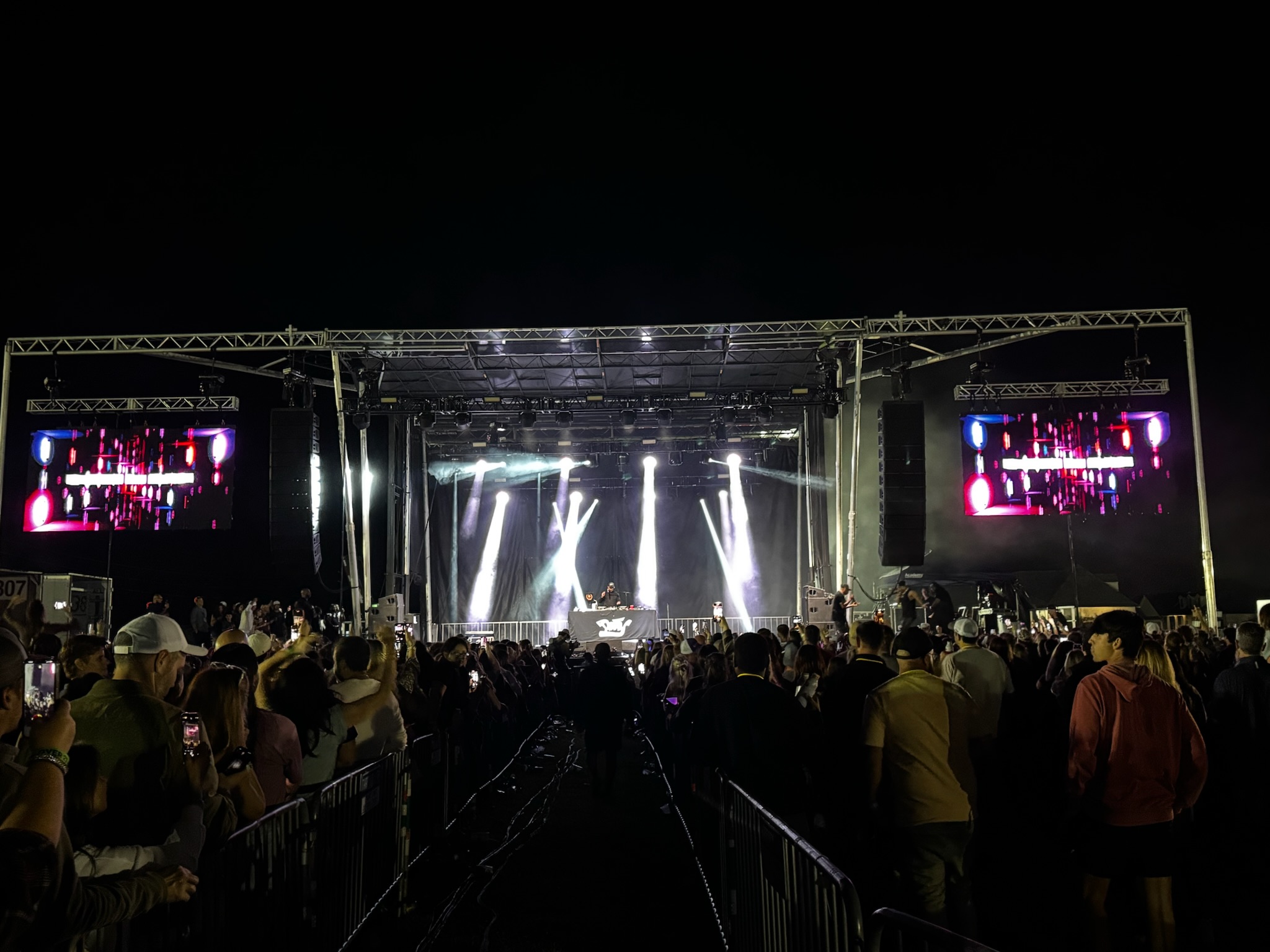
Article
How Intelligent Lighting for Concerts, Festivals and Corporate Meetings Has Changed in the Last Five Years
Ask a production manager what slows down a lighting load-in and you rarely hear "the fixtures." You hear about addressing, cable runs, weather, and programming time nobody budgeted. Those are the areas where intelligent lighting has moved the most since the early 2020s.
The headline changes are easy to list: a revised DMX standard, a newer RDM revision, Ethernet control on larger rigs, wireless links that crews now trust, and weatherproof fixtures that can sit in a field overnight. What matters is how each one changes a plan, a budget, and a schedule.
Below is what changed, what it means for concerts, festivals, and corporate meetings, and what to settle with your lighting provider before load-in.
What Intelligent Lighting for Concerts Means Now
The term covers programmable fixtures that change color, position, brightness, beam shape, and pattern on command, and do it in sync with a show. A moving head can swing from a tight beam on a singer to a wide wash across a crowd in a single cue. A fixed par can't.
The fixture is only half of it. The other half is control: a console, a data network, and a programmer who has built the cues. A rig of forty moving heads with no programming time is forty expensive work lights.
Different events ask different things of the same technology:
- Concerts prioritize movement and impact. Beams, fast position changes, and color shifts timed to the music.
- Festivals prioritize durability. Fixtures need to survive wind, dust, rain, and fast changeovers between acts.
- Corporate meetings prioritize flexibility and clear stage visibility. Presenters need to look good on camera and in the room, and the look has to change between a keynote, a panel, and an awards segment.
Planning starts with which of those three you are running, because it decides almost everything downstream.
What Changed in the DMX Standard
DMX512 is still the baseline language of stage lighting. It controls dimmers, moving heads, washes, strobes, and fog machines, and nothing has displaced it. What changed is the paperwork behind it. The current standard is ANSI E1.11-2024, a full revision that stays backward compatible, so existing fixtures and consoles keep working.
For a planner, the practical point is this: the old rules still hold. A DMX universe carries 512 channels. A link is built for 32 unit loads and roughly 300 meters (1,000 feet) of cable. The data runs at 250 kbit/s, and the console resends the whole universe 25 to 44 times per second. The signal is one-way, so the console talks and fixtures listen.
That one-way design explains why DMX problems are usually physical. The protocol is simple and slow on purpose. When a rig misbehaves, suspect the cable, the termination, or the patch long before you suspect the fixture.
How RDM Cut Setup Time
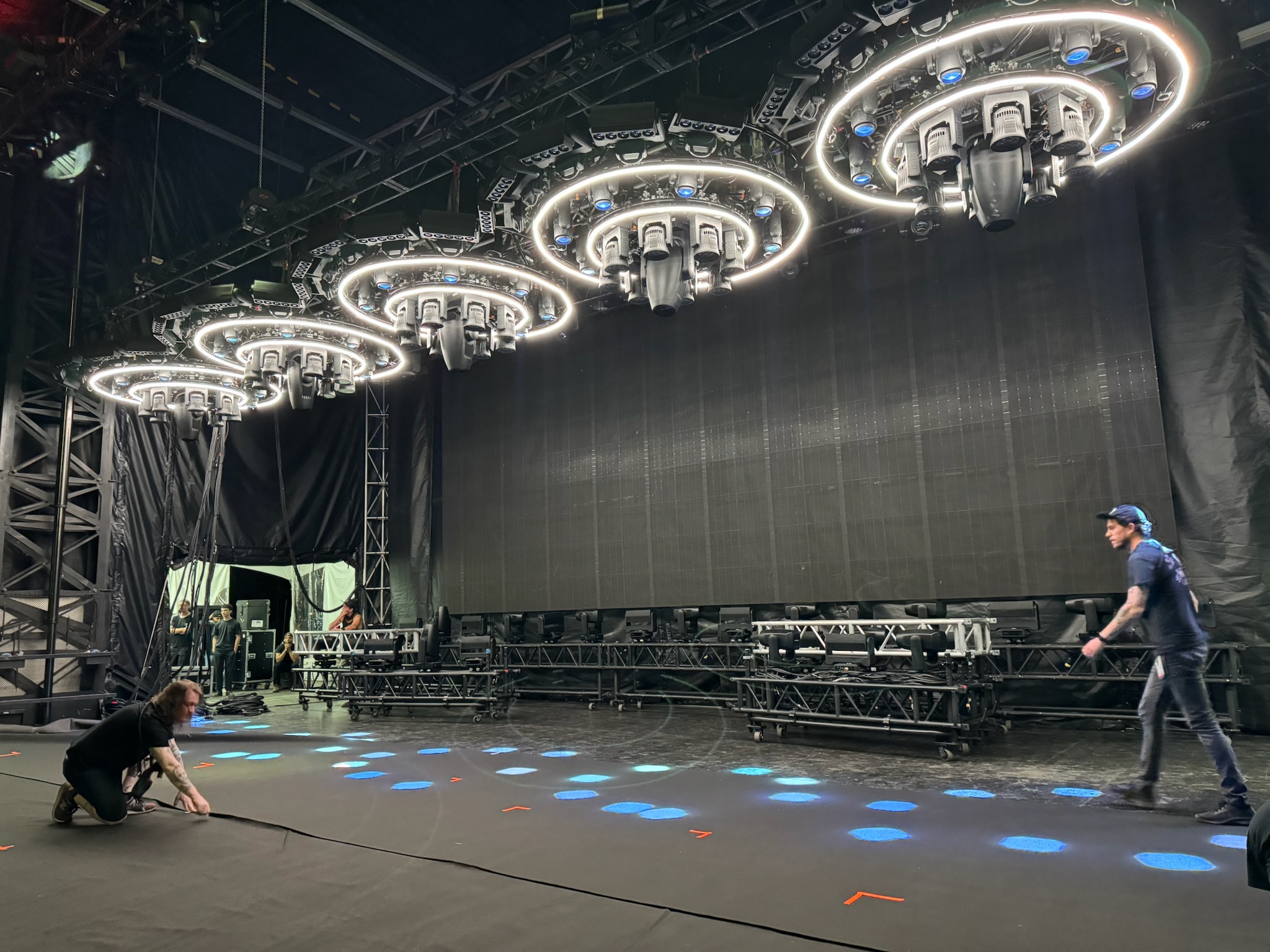
The biggest change in daily crew work came from RDM, standardized as ANSI E1.20 and revised again in 2025. It adds two-way communication on the same DMX line. A controller can discover fixtures, read their identity and status, and change start addresses without anyone touching the unit.
Picture re-addressing a moving head hanging on a truss. Without RDM, someone climbs, pulls the fixture's menu, and retypes the address. With RDM, the operator does it from the console.
What RDM does well:
Addressing at height.
Changes happen from the desk, not the truss.
Discovery.
The console reports which fixtures are alive on each link, so a dead unit shows up before doors open.
Status reads.
Temperature and error flags come back on fixtures that support them.
What it does not do: it won't fix a bad cable, and it won't monitor a show the way a dedicated system would. Specify it where remote setup and diagnostics save real time, and confirm both the fixtures and the controller support it. One RDM-blind splitter on the line can break the whole feature.
Why Larger Rigs Moved to Networked Control
A single DMX universe fills up faster than most people expect. Take a moving head that uses 24 channels. At 512 channels per universe, you fit 21 of them. A 32-channel fixture drops that to 16. A rig of 40 of the 24-channel heads needs 960 channels, which means two universes before you add a single wash or strobe.
Sixty fixtures at that profile means three universes. Run those as separate home-run cables across a large stage and the cable count climbs fast.
This is why Ethernet-based protocols such as Art-Net and sACN now sit alongside DMX and RDM in the control stack for bigger shows. The console sends many universes over a network, and nodes near the fixtures convert them back to DMX for the last stretch. Fewer long copper runs, easier expansion, and a cleaner path when a designer asks for ten more fixtures on the day.
The trade-off is planning. A networked rig needs a documented patch: which universe, which node, which address. It also needs a decision made early about which protocols your console, nodes, and fixtures all support. Settle that at the design stage, not at the load-in dock.
Weatherproof Fixtures at Festivals
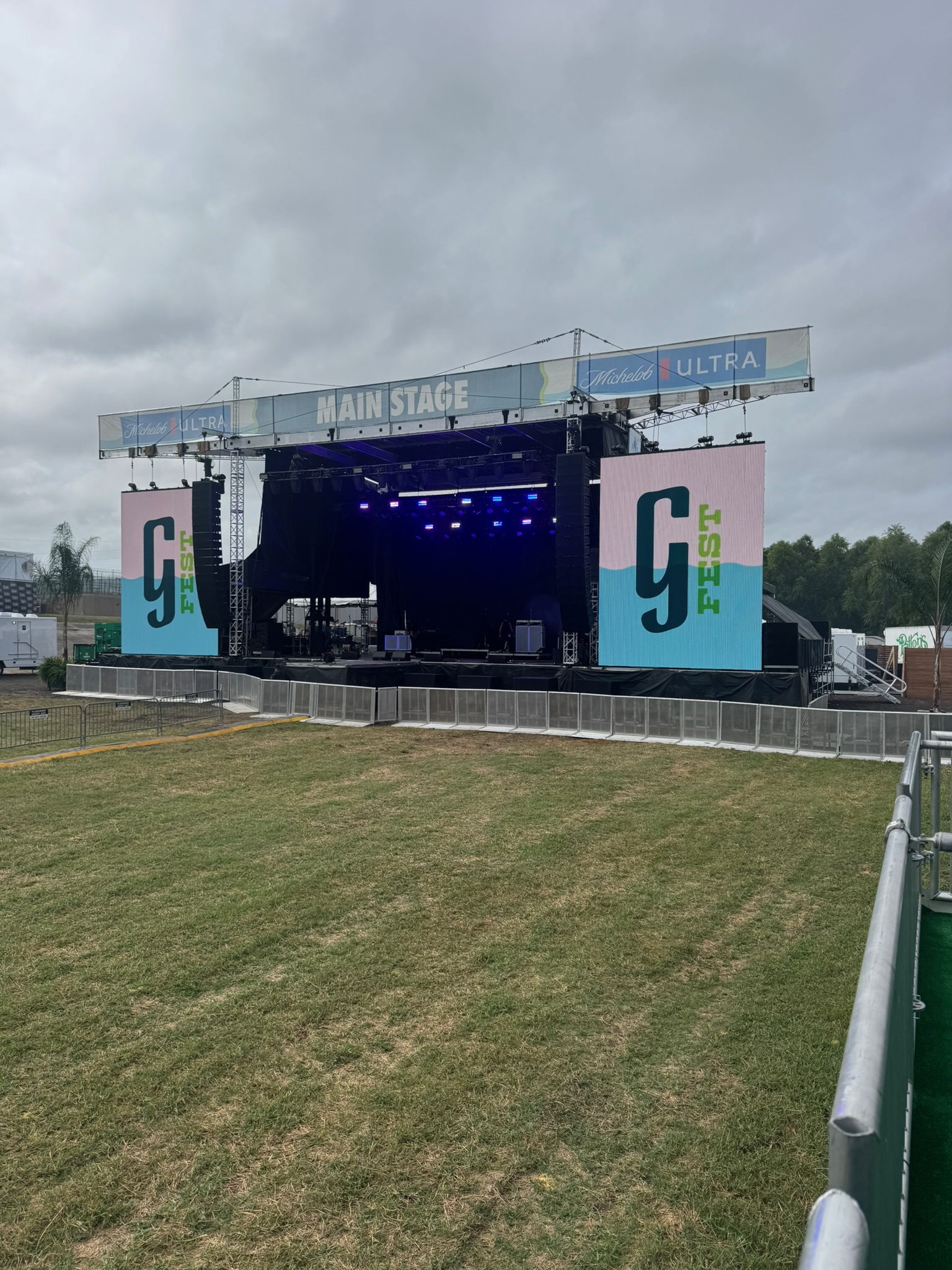
Festival lighting used to mean covering gear with tents and hoping. Over the last few years, weather-resistant intelligent fixtures, especially IP65-rated units, have become far more common on outdoor stages. IP65 means the housing is sealed against dust and protected from water jets, which is the rating that matters when a storm line crosses a field at 4 p.m.
That changes the plan in practical ways:
Fewer weather holds.
Rated fixtures can stay on the truss through a shower instead of coming down.
Faster turns.
Less time spent on covers and drying out between sets.
Different rigging math.
Outdoor trusses face wind load, so rigging and weight limits need a conversation up front. Our rigging and truss team handles that part.
Power planning.
Outdoor lighting rigs pull real load, which ties directly to generators and power decisions.
Rated gear is not a reason to skip the weather plan. It reduces risk. It doesn't remove the need for a storm procedure, and it doesn't make indoor-only fixtures safe outdoors. Match each fixture's rating to where it hangs.
Where Wireless DMX Earns Its Place
Wireless DMX is now a practical option on some stage setups. It works best where cable runs are hard: a thrust stage with a long traverse, fixtures on a roof structure, a scenic piece that moves, or a fast load-in where saving thirty minutes of cabling matters.
It is not a replacement for good copper on every show. Radio links add a variable that a cable doesn't, so crews treat the wireless link as a planned part of the design, with frequency checks during setup and a wired fallback for anything critical.
A sensible rule: use wireless where cable is the problem, and use cable where cable works. The question to ask a lighting provider is not "do you have wireless?" It is "where would you use it on this show, and what is the backup?"
What This Means for Concerts, Festivals and Corporate Meetings
Concerts
Reserve programming time and put it on the schedule. Intelligent lighting depends on cue timing and synchronization, not just hanging fixtures. If the act brings a lighting designer, agree on console type and file format early. Our concert and event lighting page covers what we provide, and the work for Dillon Carmichael and KC & The Sunshine Band shows concert production in practice.
Festivals
Confirm weather ratings, rigging limits, and changeover time for every stage. Plan universes per stage so one failure doesn't take down another. For multi-stage events, see our festival production and festivals and tours pages.
Corporate meetings
Flexibility wins. Presenters move, cameras change angles, and a client's brand color has to hold across the room and on screen. Ask for scene presets that operators can recall quickly, and for a clean stage look at every lectern position. More on that work sits under corporate event production.
Mistakes That Still Cause Most Lighting Problems
New protocols haven't removed the old failure points. Watch for these:
Treating intelligent lighting as plug-and-play.
Channels, universes, addresses, and console workflow need planning before load-in.
Skipping termination.
A missing 120-ohm terminator at the end of a link causes flicker, color glitches, and dropouts. Exactly one terminator belongs on the last device, and two is as wrong as none.
Using microphone cable for data.
Mic cable runs 60 to 90 ohms. DMX expects 120-ohm twisted pair. It may pass a bench test and then fail on a 40-meter run.
Splitting with a passive box.
DMX is a bus. A powered, opto-isolated splitter creates a separate link per output and also breaks ground loops between circuits.
Duplicate addresses.
Two fixtures on the same start address move together and look stuck. A fixture left at its factory address of 1 is the other classic.
Assuming one rig fits every room.
An indoor ballroom and an outdoor field need different output, durability, and weather rating.
Planning programming last.
Testing, patching, and sync need their own block of preproduction time.
When something does go wrong, check in this order: termination, addresses against the patch sheet, a known-good cable swap, then isolate the last working fixture from the first failing one. That sequence finds most faults in about fifteen minutes.
Frequently asked questions
Do we need RDM on every fixture?
Not always. It pays off when fixtures hang in places that are slow to reach, such as truss, ceilings, and rooftops. For a small ground-level rig of simple pars, manual addressing may take less time than setting up RDM.
How many fixtures fit in one DMX universe?
It depends on each fixture's channel count. Divide 512 by the channels it uses and round down. A 20-channel fixture gives you 25 per universe, and a 24-channel fixture gives you 21. A fixture's last valid start address is 512 minus its channel count plus one.
Can the same lighting rig work indoors and outdoors?
Only if the fixtures carry the right ratings. Indoor-rated units can fail in rain or heavy dust, while IP65-rated units are built for outdoor stages. Give your provider the venue type and the weather plan, and ask which fixtures on the list are rated for exposure.
Is the new DMX standard going to make our existing gear obsolete?
No. ANSI E1.11-2024 keeps backward compatibility, so fixtures and consoles you already use will keep working with updated ones.
When should we bring in the lighting provider?
Before the stage plot and venue layout are final. Universe count, rigging points, power draw, and programming days all depend on the lighting design, and each one gets more expensive to change after the plan is locked.
More from News & Articles
Tell Us
About Your Show
Send us the event type, the venue, the date, and a rough idea of the look you want. We'll tell you what the rig needs in universes, rigging, power, and programming time, and where the risks sit. Reach us through the contact page, or start with our full list of live event production services.